Workwear for your team · Shenzhen, China

Fabric selection

Find the right fabric
for your workwear.

Tell us what the team does, where they work and how the clothing is washed. We’ll help you compare materials around those needs.

Already have a fabric you like? A garment or swatch is a useful place to start.

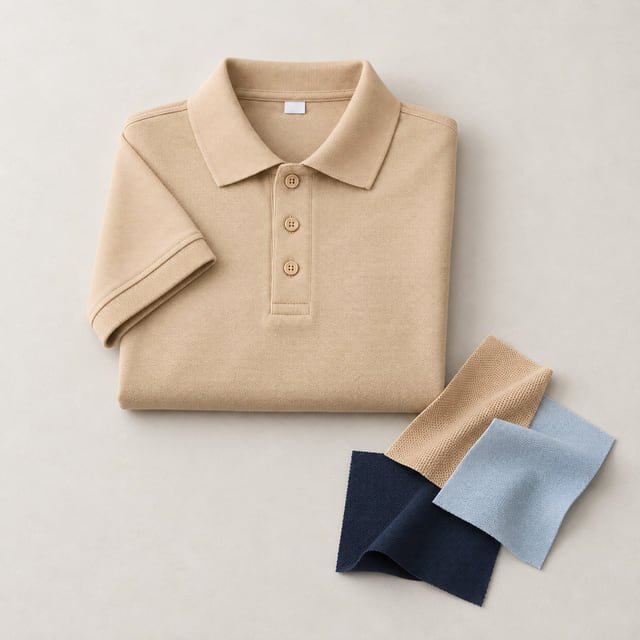
Folded khaki polo shirt beside khaki, pale blue and navy fabric swatches on a light tabletop.
From a swatch to a garmentReference illustration

A quick fabric guide

There’s more to fabric
than the fiber name.

Fiber
Cotton, polyester, nylon or a blend. This tells you what the material is made from.
Structure
The knit, weave or layers. Two cotton fabrics can have a very different texture and drape.
Finish
How the surface is treated. Agree any special finish and the checks it needs separately.

A CLOSER LOOK

Get to know
the fabrics.

Explore six common fabric types and what to look for in each. We’ll help you narrow down the options for your garment.

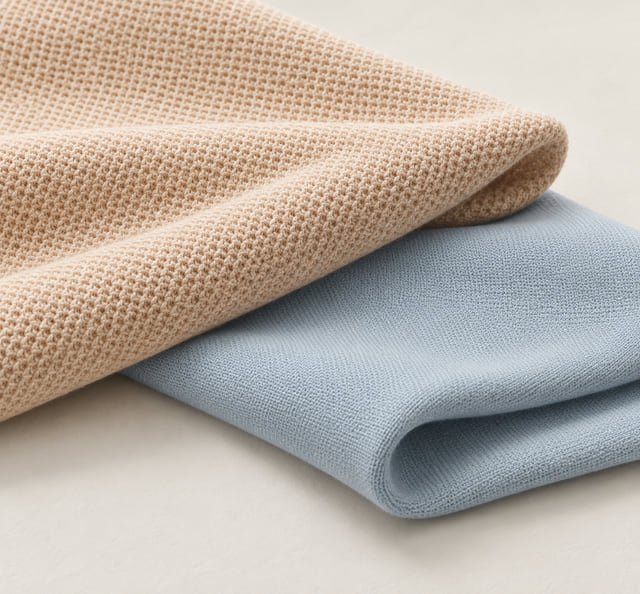
Illustration of folded beige textured fabric and blue-grey smoother knit fabric.

Reference illustration · Khaki piqué beside a smoother blue knit.

TEXTURED KNIT

Piqué for a polo with texture.

The small-scale texture gives piqué its familiar polo appearance. Try cotton, a cotton blend or polyester side by side to find the feel you prefer.

Your options
Fiber blend, fabric weight, stretch and the texture you prefer.
Try this with a swatch
Feel it against the skin, hold it up in your chosen color and see how it falls. Check the logo on the same fabric.
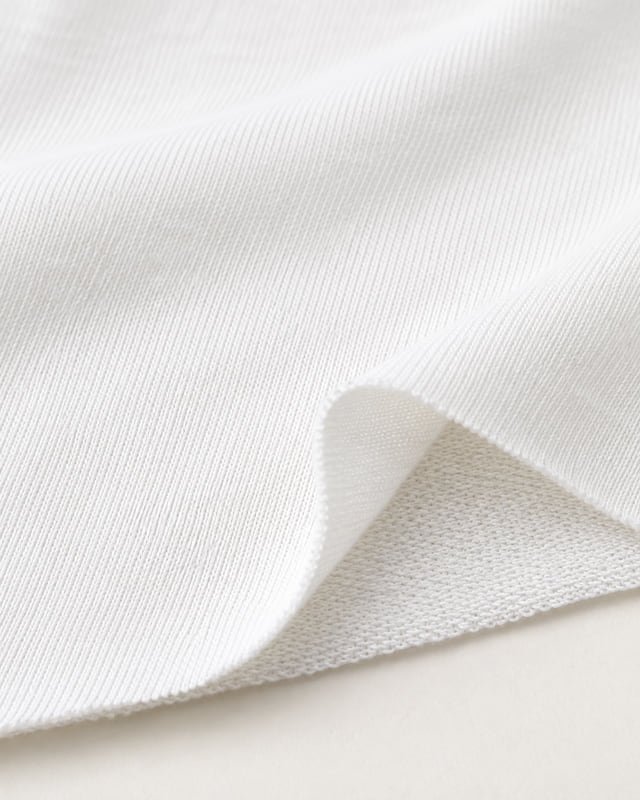
Reference illustration: White jersey fabric with a folded corner showing its fine knit face and reverse.

Reference illustration · Jersey face and reverse.

SMOOTH KNIT

Jersey for an everyday T-shirt.

Start with cotton jersey or a stretch blend. Compare how much body the fabric has, how it drapes and how it feels through a working day.

Your options
The blend, weight, stretch and finish, alongside the T-shirt shape.
Try this with a swatch
Check opacity in light colors and how the fabric recovers after a gentle stretch. Ask to compare it before and after washing.
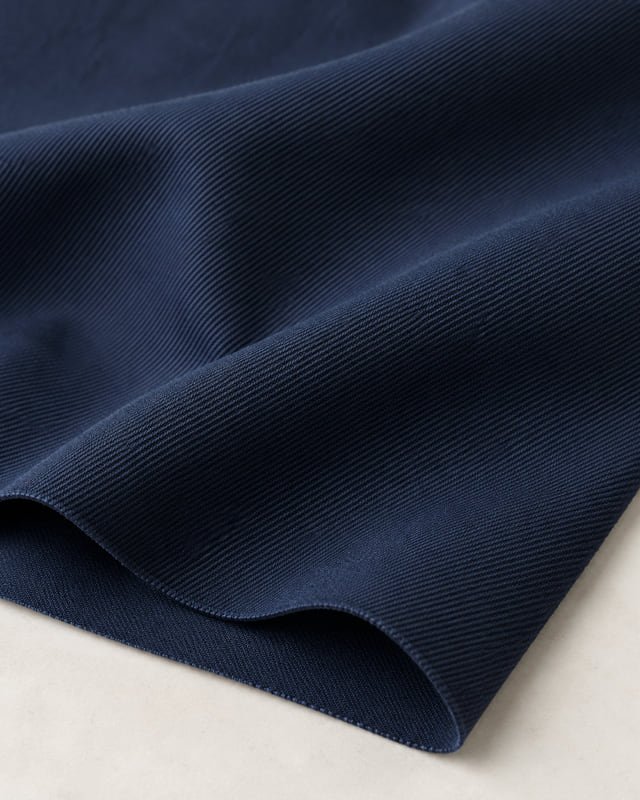
Reference illustration of navy fabric with fine diagonal twill lines and a folded edge.
Fine twill
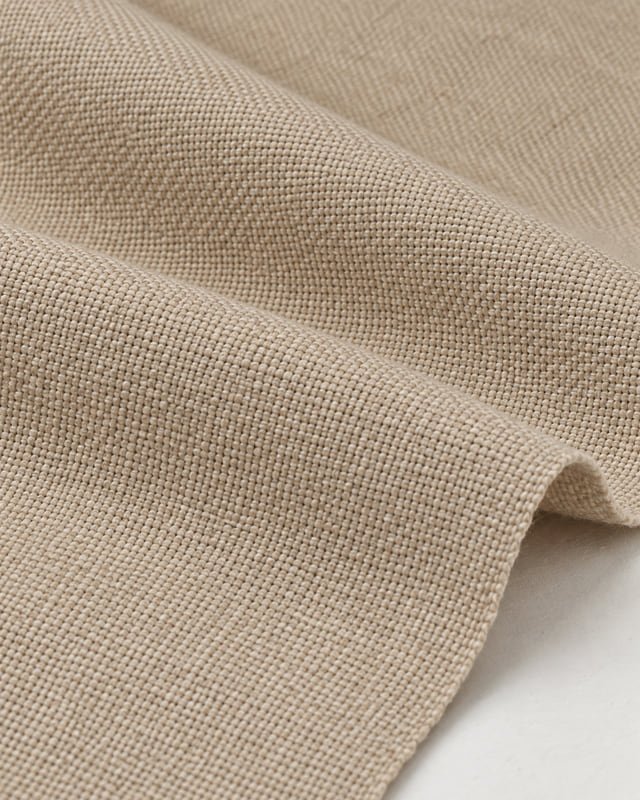
Reference illustration of beige fabric with a visible canvas weave and soft folds.
Canvas

Reference illustrations · compare a finer weave with a heavier texture.

WOVEN FABRICS

Twill or canvas.
Feel the difference.

A fine twill for a shirt and a more substantial canvas for a jacket need different decisions. Think about how structured or relaxed you want the garment to feel.

Your options
Cotton or a blend, fabric weight and finish. A lining or extra panel can be considered as part of the garment.
Try this with a swatch
Fold the fabric as it would sit at a pocket or seam. Compare drape, surface feel and the thickness of several layers.
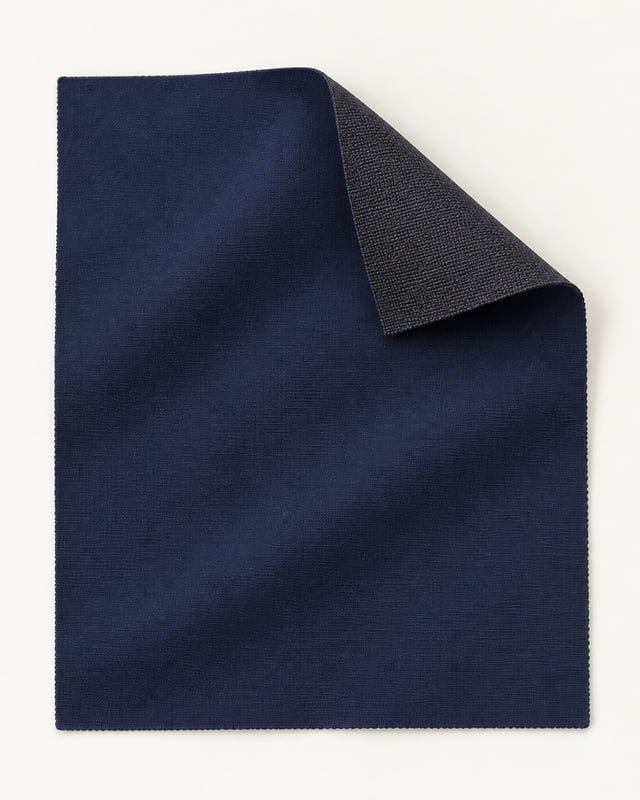
Reference illustration of a navy fabric swatch with one corner folded back to show its dark textured reverse.

Reference illustration · check the complete layer construction on your swatch.

FACE, BACKING & LAYERS

Look at both sides of a softshell.

Compare a nylon or polyester stretch face with its backing. The feel comes from the complete construction, including any layers between them.

Your options
Face fabric, backing, stretch and overall thickness. Let us know if the garment needs a membrane or a particular level of weather protection.
Try this with a swatch
Flex it, feel both surfaces and compare the bulk at a folded edge. If you need weather protection, we’ll confirm the construction and testing needed.
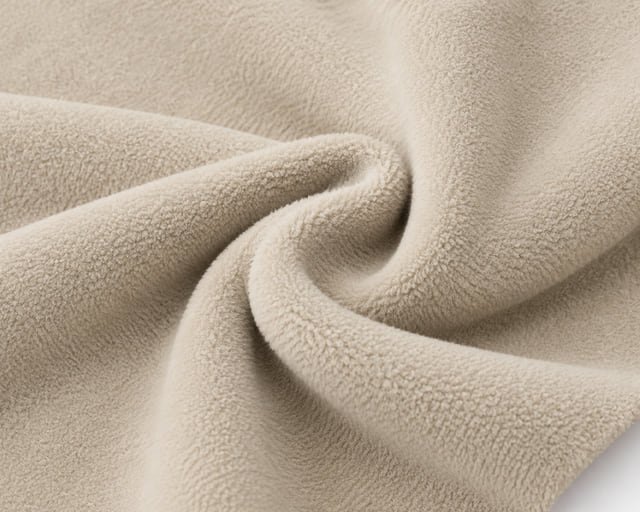
Reference illustration of beige short-pile fleece folded to show its surface texture.

Reference illustration · compare pile, thickness and the reverse.

PILE & LAYERING

Choose the fleece by touch.

Polyester fleece can work as a separate jacket or a layer under another garment. Compare the surface, thickness and inside feel with a garment the team already likes.

Your options
Pile appearance, weight and bulk, with room for the clothing worn underneath.
Try this with a swatch
Feel the surface and reverse, and compare its appearance after washing. If pilling is a concern, bring that into the fabric discussion.
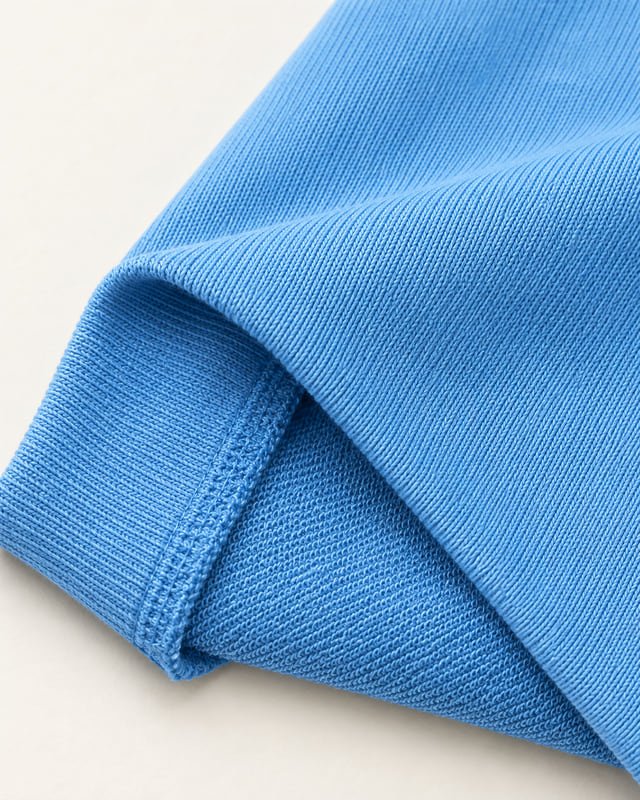
Reference illustration: Blue sweatshirt fabric folded to show a smooth knit face and a looped reverse.

Reference illustration · The knit face, rib cuff and small loops on the reverse.

SWEATSHIRT KNIT

Turn the sweatshirt fabric over.

An unbrushed loopback has small loops on the reverse. Compare it with any brushed or separately lined option by handling both sides, not just looking at the outside.

Your options
The fiber blend, weight and inside finish. If you want a separate lining, we’ll look at that alongside the main fabric.
Try this with a swatch
Compare drape and seam thickness, then feel the inside against the intended underlayer. Check the fabric and rib trim together on the garment sample.

BEFORE YOU CHOOSE

A photograph gets you started.
A swatch tells you more.

We’ll help narrow down the options. Then handle the material in the color you’re considering and check the details that matter to your team.

Folded khaki polo shirt beside khaki, pale blue and navy fabric swatches on a light tabletop.
Reference illustration · Discuss fabric choices with a garment reference.
  1. Feel it as it will be worn.

    Compare the face and reverse. Check stretch, drape and bulk against the clothing worn underneath.

  2. Look at the actual color.

    Check swatches in useful lighting and alongside other uniform pieces. A screen is a starting point for color discussion.

  3. Bring up the wash routine early.

    Tell us about home or commercial laundering, temperature and drying. We can then discuss the checks needed for that routine.

  4. Check the logo on that fabric.

    Review embroidery, printing or a transfer on the material you choose. Surface texture and stretch can change how a logo looks and feels.

Need help choosing?

Tell us about the job.
We’ll help choose the fabric.

The garment, working conditions and wash routine are enough to begin. If you have a current uniform or swatch, tell us what you would keep and what you’d change.