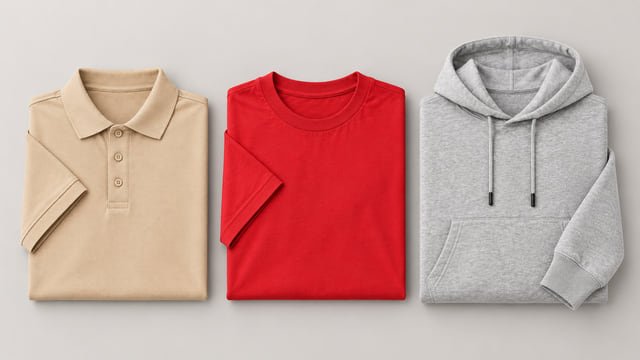
A warehouse team and a front desk can look like one business without wearing the same clothes. Start with the work people do, then choose the garments, fit and details around them.
Choose from our reference styles, adapt a combination below, or bring a design of your own.
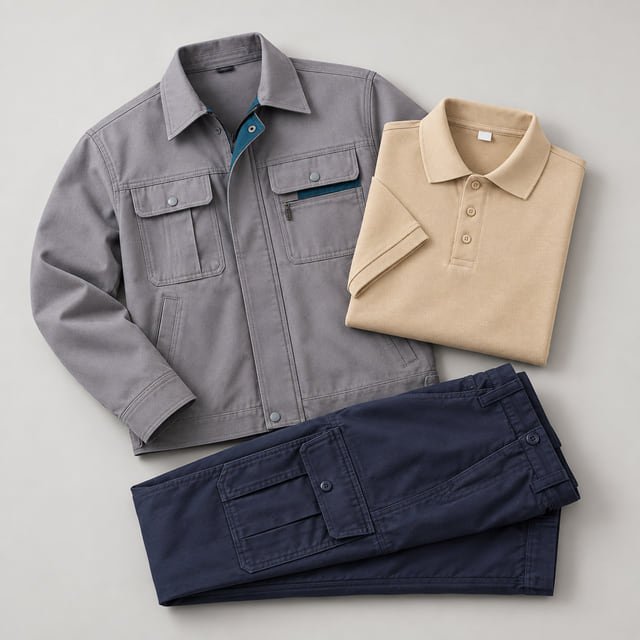
Illustrative clothing combination. Garments and quantities are agreed separately for each project.
Six ways to start
Choose around the role. Make it your own.
These combinations are ideas to work from. Follow the garment links to explore styles, or take a starting mix into your enquiry and add or remove pieces there.
For everyday staff clothing. Tell us about any specific protective or compliance requirements before we select or develop a garment.
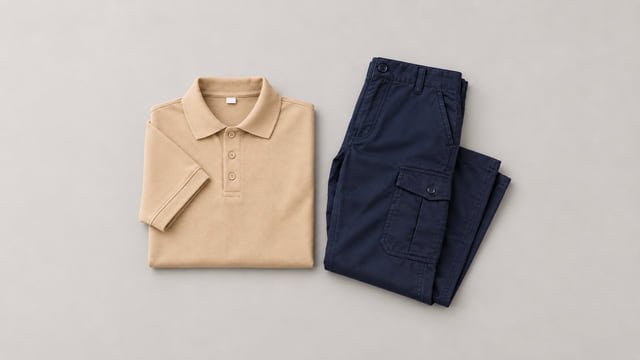
Reference illustration · Polo and trouser combination.
01
Warehouse & logistics
Start with a polo and work trousers. If people move between indoor and outdoor areas, discuss a layer they can put on without changing the whole outfit.
Movement first
Try reaching, bending and sitting in the sample. Check trouser fit and shirt length together.
What comes along?
A scanner, phone or pass may need a place. Match pocket size and position to the items used and your site rules.
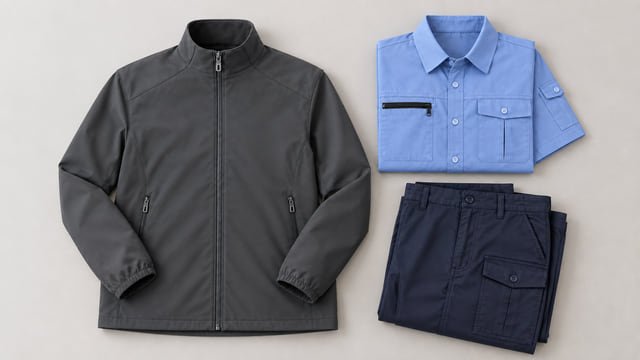
Reference illustration · Everyday production team clothing.
02
General production
A work shirt and trousers give you separates to adapt by role. Add a matching jacket where needed, or discuss a coverall if a one-piece garment is part of your brief.
Start with site requirements
Share your workplace dress rules before choosing the pockets, closures and garment shape.
Plan the fit as a set
Check sleeve and body length with the arms moving. If a jacket is included, try it over the intended shirt.
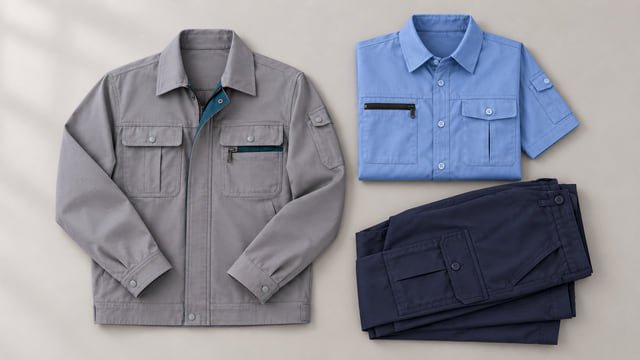
Reference illustration · Maintenance team clothing.
03
Maintenance & service
Your team represents the business at every customer visit. Bring a work shirt or polo together with trousers and an outer layer that carries the same identity.
Check the usual movements
Driving, crouching and reaching can change where clothing pulls. Use those movements when reviewing the fit.
Make the team easy to recognise
Plan a visible logo on the shirt and outer layer, then choose pockets around what people actually carry.
Reference illustration · Polo and trouser combination.
04
Property & cleaning
A coordinated top and trousers can give teams a clear identity across different buildings. Choose the fabric and fit around everyday movement and the way the clothing will be washed.
Talk through the care routine
Tell us who washes the garments and how. Review the fabric, logo finish and care instructions together.
Keep daily details practical
Discuss shirt length when bending, pocket access and any identification your team needs to wear.
Reference illustration · Clothing for customer-facing teams.
05
Retail & customer service
A polo, T-shirt or work shirt can set a different tone for the same brand. Pick the look for each role, then carry the colors and logo through to a warmer layer.
Give the team a consistent look
Consider how colors and logo placement work across the counter, sales floor and different store locations.
Leave room for fit preferences
Compare garment shapes and sizes with the people wearing them. Include the layers needed for cooler spaces.
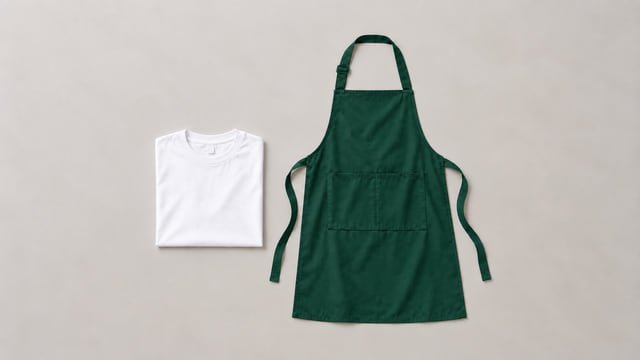
Bring a polo or T-shirt together with an apron that suits the way your team serves. The clothing underneath, apron straps and logo all need to work as one outfit.
Try the apron on
Check coverage, strap adjustment and how it feels when sitting or reaching. Review it over the intended top.
Put the small details to work
Plan pockets for the items staff carry, the wash routine and any headwear required by your own dress policy.
Fabric swatches and blank garments help with early choices. A custom sample brings the agreed fabric, fit and branding together for approval before production.
Include different roles and body shapes in the sample review. Ask where the garment pulls, feels loose or gets in the way. Note the sample size and the change you want, then share the feedback together.
Try the layers together, including any apron or headwear. Check that collars, hems, straps and logos sit as expected. Free design visuals can help compare the look; the physical sample is where you confirm the details.
A team of 40 might need more tops than jackets. Share an approximate quantity for each garment, then work through sizes and locations with us. You can add or remove product lines in the enquiry form.
Tell us who will wear the clothing, the garments you have in mind and the approximate quantities. A style you like or a few reference photos are enough to start the conversation.