Receive your chart
Send your country and chosen style. We’ll provide suitable size options and explain the measurements.
We provide the size chartWorkwear size charts & measuring guide
Tell us your country and the style you’ve chosen. We’ll send a suitable size chart, help you check the fit and work through any adjustments.
No chart of your own? That’s fine. We provide the chart for your style; you choose the sizes your team needs.
We help with the sizing
Size charts vary by country and garment. We’ll suggest one for your chosen style and the sizing your team normally uses, then help with any changes.
Send your country and chosen style. We’ll provide suitable size options and explain the measurements.
We provide the size chartCompare the chart with the sizing you use locally. Tell us if you need a different fit or length; we can help adjust it.
We help with adjustmentsUse S, M, L or the labels on the agreed chart. Let us know how many pieces you need in each size.
Mixed sizes are welcomeMixed sizes in one order
Our existing styles with your logo start at 20 pieces per style. Fully custom styles start at 100 pieces per style. Both can include different sizes.
| Your chosen style | S | M | L | XL | Total |
|---|---|---|---|---|---|
| One existing polo styleYour company logo | 5 | 8 | 5 | 2 | 20 |
The size labels above are examples. Use the labels on the chart for your chosen garment; we can provide other sizes where needed.
Ask for a quote with your estimated total. You can confirm the size quantities with us before production.
Give us a size count for each garment. We’ll help organize the list if your team needs both tops and trousers.
Tell us which sizes your team normally wears. We’ll help you compare them with the chart for your selected style.
Getting started is simple
That’s enough for us to suggest a size chart. If you have a chart you already use or a uniform that fits well, you can share it too.
Once you’ve checked the chart, send the size quantities for each style. An anonymous list is enough; we don’t need employee names or individual body measurements.
Planning uniforms for a teamOptional measuring help
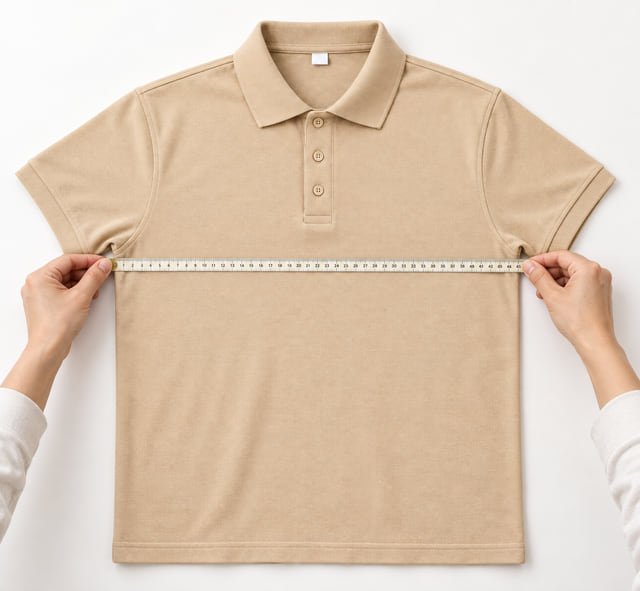
A favourite uniform can help you check our chart. Use the guide below if you’d like to measure it, or send us a photo and we’ll explain where to place the tape.
Note the style, size label and sample version. If it has been washed or altered, say so. Keep different fits and leg lengths separate.
Use a clear photo or sketch with the measurement path marked. Agree how the garment is laid out and whether a fastener is open or closed.
Use centimeters or inches consistently. Say whether an elastic or adjustable section is relaxed or extended, and whether the value is a width, circumference or length.
Choose your garment below. Follow the points shown on the chart we send; these examples help explain the main measurements.
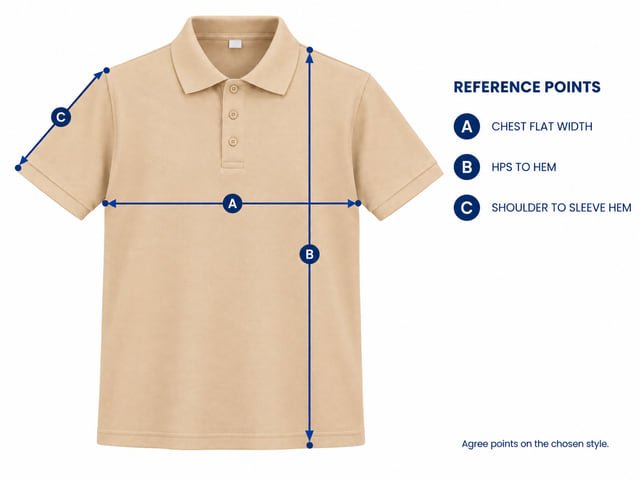
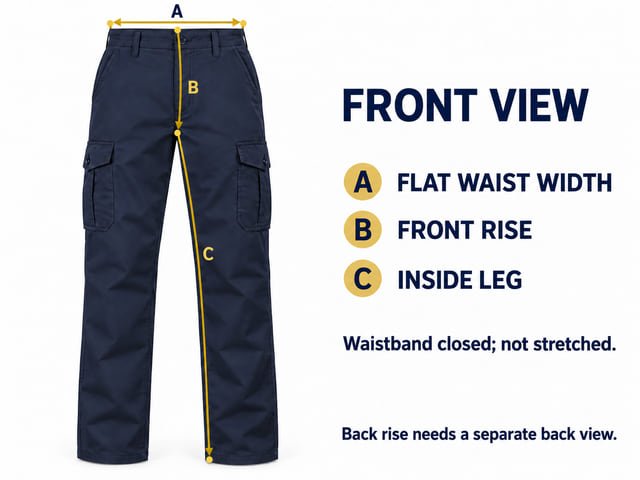
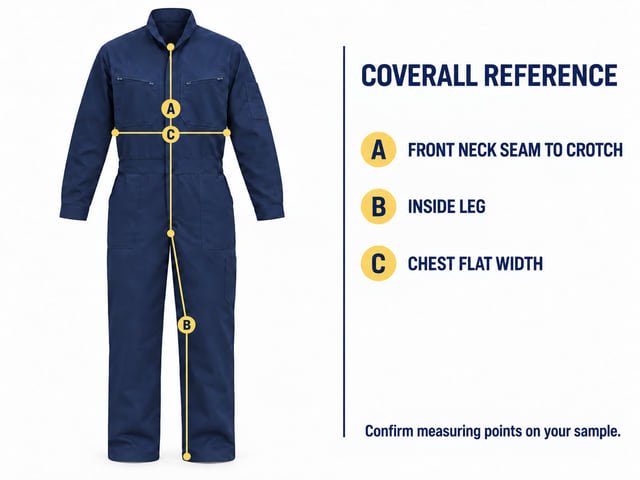
Measuring a vest, apron or headwear? Start with the same reference, unit and method. The relevant coverage, opening, strap or adjustment measurements depend on that design.
If you want to check the fit
If you’re unsure about the fit, a reference sample can help. Try it with the clothing normally worn underneath.
A suitable blank garment lets you compare the fit and feel. For a newly developed style, we also review the customized sample before production.
Sleeves too short, or tight across the shoulders when reaching? Tell us where it feels wrong and which size you tried.
We’ll recommend the next step, whether that’s another size or a change to the fit. We record any agreed changes before production.
A few practical questions
Start with the style you like. We’ll take care of providing the chart and explaining the options.
Yes. Tell us your country and the garment you’ve chosen. We’ll provide a suitable chart or size options for you to check against your local sizing. Charts vary by style, and we can help adjust the fit if needed.
Yes. Send it with its units and measuring notes, if you have them. We’ll review it against the garment you want and help with anything that needs clarifying.
Yes. Existing styles with your logo start at 20 pieces per style; fully custom styles start at 100 pieces per style. You can mix sizes within each style.
Yes. Tell us the style and estimated total quantity. We’ll send the size chart, and you can confirm the size quantities before production.
Let’s find the right sizes
Send the style link and your country. We’ll help you choose a suitable size chart for your team.