

For a small order that you need quickly, start with a local supplier that has the right garments in stock and can add your logo. For planned custom production, compare suitable suppliers in China and Vietnam on the same design, quantity and delivery brief.
The useful question is which supplier can deliver the clothing you need, at a workable total cost, and support the next order. Location affects that decision, but the supplier's stock, development skills and production arrangements often matter more than the country name.
A local supplier is not necessarily a local manufacturer
A business near you may decorate imported blanks, hold finished uniforms in stock, arrange overseas production, or manufacture garments locally. Those are different services with different costs and timelines.
Ask two simple questions: Where will the garments be made, and who will handle the decoration and delivery? A local contact can be valuable even when the clothing is made abroad. You may be paying for easier fittings, stockholding, smaller repeat orders and someone nearby to resolve a problem.
Use the order itself to decide where to begin:
Swipe to see the full table.
| Your situation | First route to compare | What must be confirmed |
|---|---|---|
| A small batch of standard garments needed soon | Local stock supplier with decoration | Available sizes and colors; completion date |
| A custom fabric, fit or combination of details | Local custom makers and suitable Chinese or Vietnamese suppliers | Sample capability; minimums by style and color |
| A planned, recurring order for an established style | Manufacturers already making similar garments | Material supply; capacity; delivered cost |
| A few replacements at a time | A supplier holding the approved style locally, or an agreed buffer stock | Ongoing availability and replenishment terms |
When a local supplier makes sense
Local supply is a practical first choice when the service around the garment matters as much as the garment itself. A nearby showroom can make it easier to compare sizes, let staff try a style and agree the logo position in person.
It can also suit a business that hires a few people at a time. Being able to buy several more shirts from existing stock may be more useful than a lower factory price tied to a much larger order.
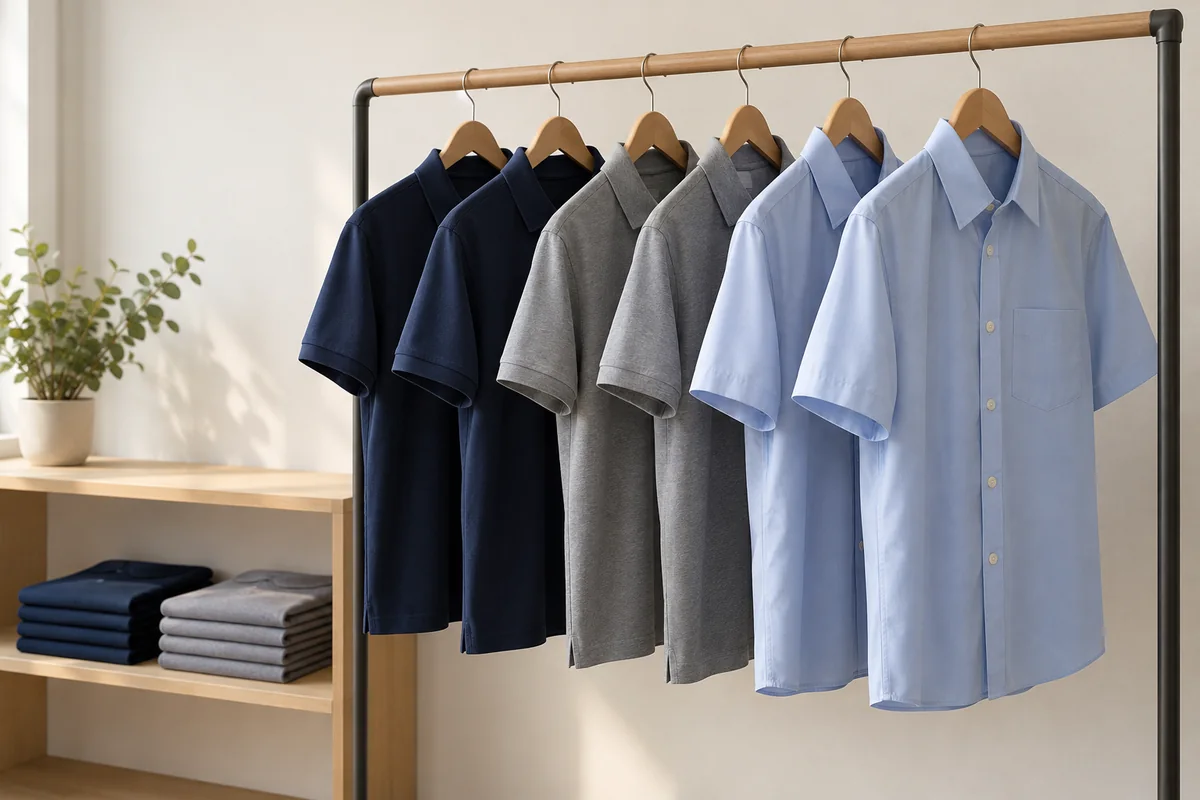
For example, a café preparing for an opening may be well served by a standard polo in an available color, with its logo added locally. A fully custom collar or specially dyed fabric could add work without improving the immediate outcome.
Check what “available” means. A supplier may be showing a catalog item that still needs to be ordered in. Get a date for the decorated garments to reach you, rather than relying on the blank garment's stock status alone.
What to compare in China and Vietnam
Both countries belong on the shortlist for overseas garment production. The comparison becomes useful once you know the type of garment and how much development it needs.
China: look at the complete development service
A Chinese supplier can be a useful starting point when your project involves several fabric, trim and decoration choices. China's domestic textile supply chain and flexibility over order quantities are strengths identified in the 2026 USFIA sourcing study, a survey of U.S. fashion companies.
For your workwear order, ask whether the supplier can bring those parts together, produce the sample and manage the finished order, or expects you to nominate and coordinate them separately.
The practical advantage is access to the right combination of services for your order. A supplier experienced in staff polos and work shirts may suit your project better than a much larger factory focused on a different product.
Vietnam: match the order to the manufacturer's strengths
The same survey also rated Vietnam well for flexibility and responsiveness. When comparing a Vietnamese manufacturer, look for recent examples of the garment type you need, then check its development service, minimum quantities and production schedule. An established style with predictable repeat orders gives you a clear basis for that conversation.
Ask where the proposed fabric and trims will come from and when they will be ready. The sewing location alone does not tell you how quickly materials can be secured. This is worth checking with suppliers in either country.
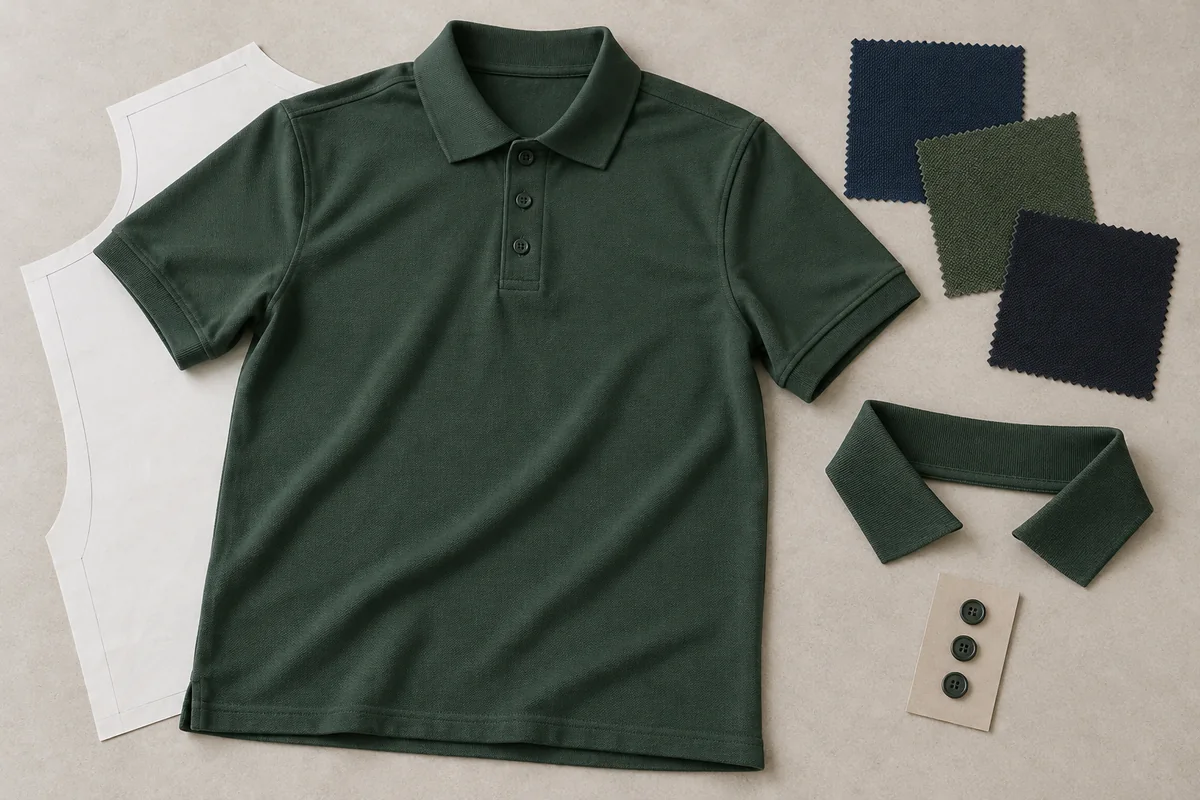
For either country, find out whether the quoted minimum is per order, per style or per color. A total of 300 pieces split across several designs can be a very different job from 300 of one style. Mixed sizes and mixed colors may also be treated differently.
For a concrete supplier example, Tervorin's ordering guide lists 20 pieces per style for existing styles with a logo, and 100 per style for full custom development, with mixed sizes allowed. Those are our service minimums, not thresholds for all Chinese factories.
For a new style, request dates for sample approval, material readiness, production and arrival. A quoted sewing time covers only part of the schedule.
Compare the cost of the whole order
Ask every shortlisted supplier to price the same garment specification, logo work, size breakdown, quantity and delivery destination. Include the development and sample charges that apply to your project, and identify which costs will recur on a repeat order.
For overseas buying, look beyond the garment price. The International Trade Administration's landed-cost guide includes freight, insurance, duties, taxes and other charges in the delivered total. Ask what is included in the quote and who will arrange import clearance and final delivery. Have any destination-specific charges checked for the actual shipment.
A local price that includes decoration and delivery cannot be compared directly with an overseas price that covers only the garments at the factory. Put both on the same basis before calculating the saving.
Also compare the money you must commit. A lower unit price is less helpful if you have to buy many more garments than your team will use. Unused sizes and obsolete branding tie up part of that apparent saving.
Plan the second order as well as the first
Before choosing a supplier, explain how you expect to buy again: a few replacements each month, a seasonal order, or a larger annual run. Ask whether the approved style will remain available and what happens if the fabric or color is discontinued.
A workable arrangement may combine overseas production for the planned main order with a small stock of approved garments held near your team. Local decoration can also make sense when you need to add individual names or branch details later. Agree who holds the stock and who is responsible for each stage.
Keep the approved garment details and logo files with the order records so the next supplier conversation starts from the same reference. Our repeat-order guide covers the information worth retaining.
For an urgent standard order, begin with available local stock. For a planned custom order, compare Chinese and Vietnamese suppliers whose capabilities fit the garment. Then choose the offer that works across delivery, total spend and replenishment. Those details make the decision useful long after the first cartons arrive.