

A simple stand-collar jacket can make an attractive staff uniform, especially when you want an outer layer that looks tidy over a polo or T-shirt. A straight front zip, uncluttered chest and small company logo give the outfit a clear identity without covering the jacket in decoration.
Here, we use Tervorin branding to show how that idea can look in light and dark colors. The illustrations explore a uniform design you can adapt to your own company.
Why the Simple Shape Works
The stand collar gives the neckline a defined edge. With the zip raised, it forms a continuous line around the neck; worn a little open, it leaves room for the collar or neckline of the shirt underneath. There is no hood adding volume behind the head.
The front zip creates a clear vertical line, while the plain chest leaves space for a logo. Lower side pockets keep storage away from that branding area. Together, these details give the jacket a balanced appearance that works well with straightforward trousers and shoes.
For reception, showroom or customer support teams, this is a useful direction when the outer layer needs to feel like part of the uniform. Keeping the jacket and the shirt beneath it in a coordinated palette helps the outfit look considered when either is worn on its own.
A Small Chest Logo Can Be Enough
In the light-colored example, the dark green Tervorin wordmark provides the main point of contrast. It is easy to find against the plain body, with open space around the lettering. The rest of the jacket stays quiet.
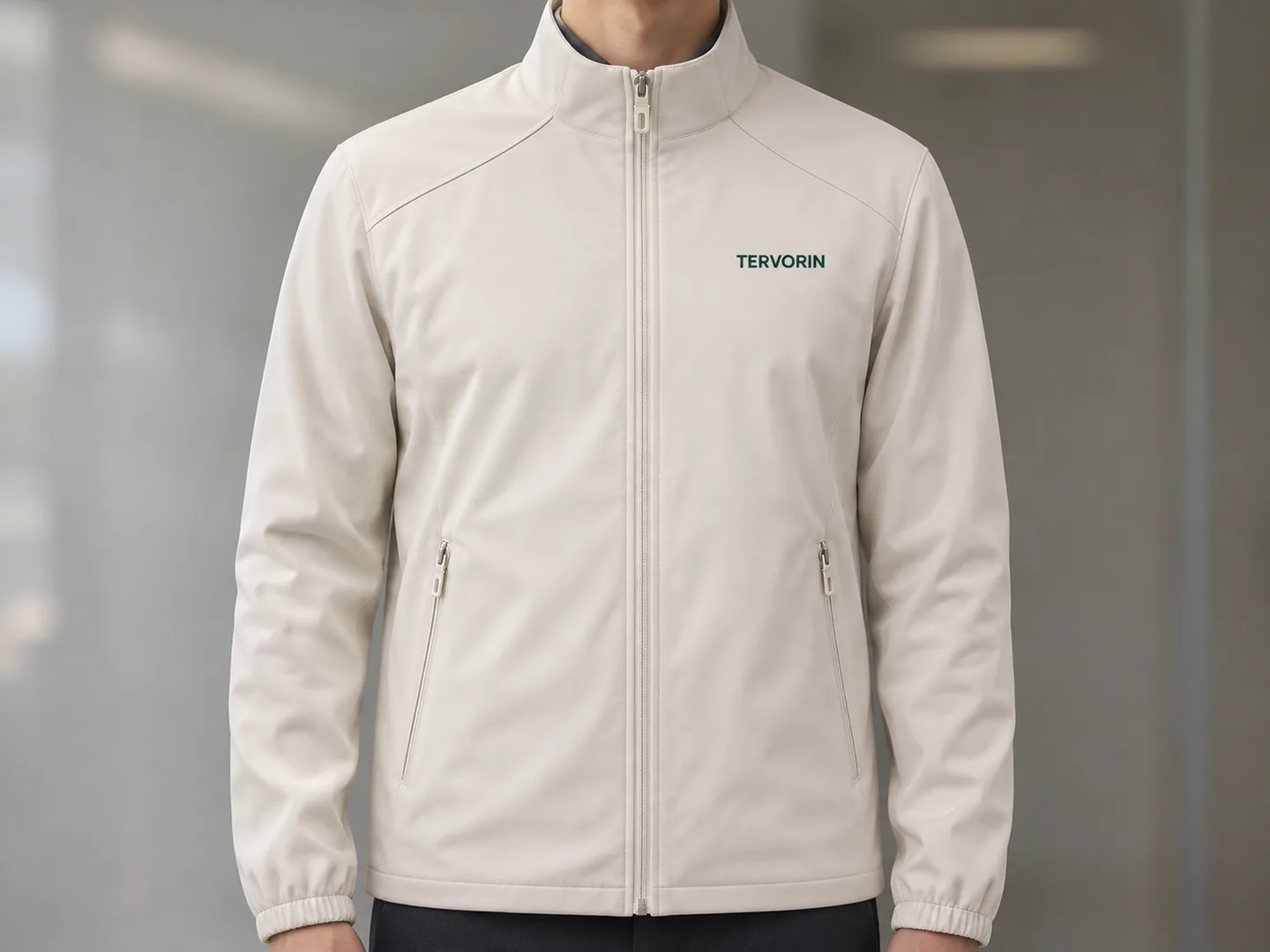
For your own branding, start with the left chest and check how the complete logo reads at the proposed size. A long company name needs more space than a simple symbol. Position it clear of the front zip, curved panel seams and the place where a lanyard or bag strap normally sits.
The finish should suit the artwork and jacket fabric. Embroidery adds a stitched texture, while a suitable heat-applied design can give a smoother appearance. Tervorin's logo and decoration guide shows the options. The illustrations here show the layout; the chosen finish is something to confirm on a physical sample.
Light and Dark Colors Set Different Moods
An off-white jacket with dark trousers creates a bright, simple combination. Matching the main zip to the jacket color keeps attention on the chest logo. A plain dark shirt underneath can connect the upper and lower parts of the outfit when the jacket is open.
Charcoal gives the same general shape a quieter, darker appearance. A small white wordmark provides a clear contrast without introducing a large graphic. It also lets a team keep its branding consistent while choosing a different jacket color for another role.
Off-white can make dark scuffs and stains more noticeable, so think about the work involved before choosing it for a whole team. A clean-looking color scheme still needs to suit the way people use and care for their uniforms.
Start with an Existing Jacket Shape
Our P04-S01 stand-collar softshell reference is a close starting point for this look. It has a full front zip, no hood, curved shoulder seams, zipped side pockets and partly elastic cuffs. The gray example below shows how a restrained chest logo can sit on that existing design.
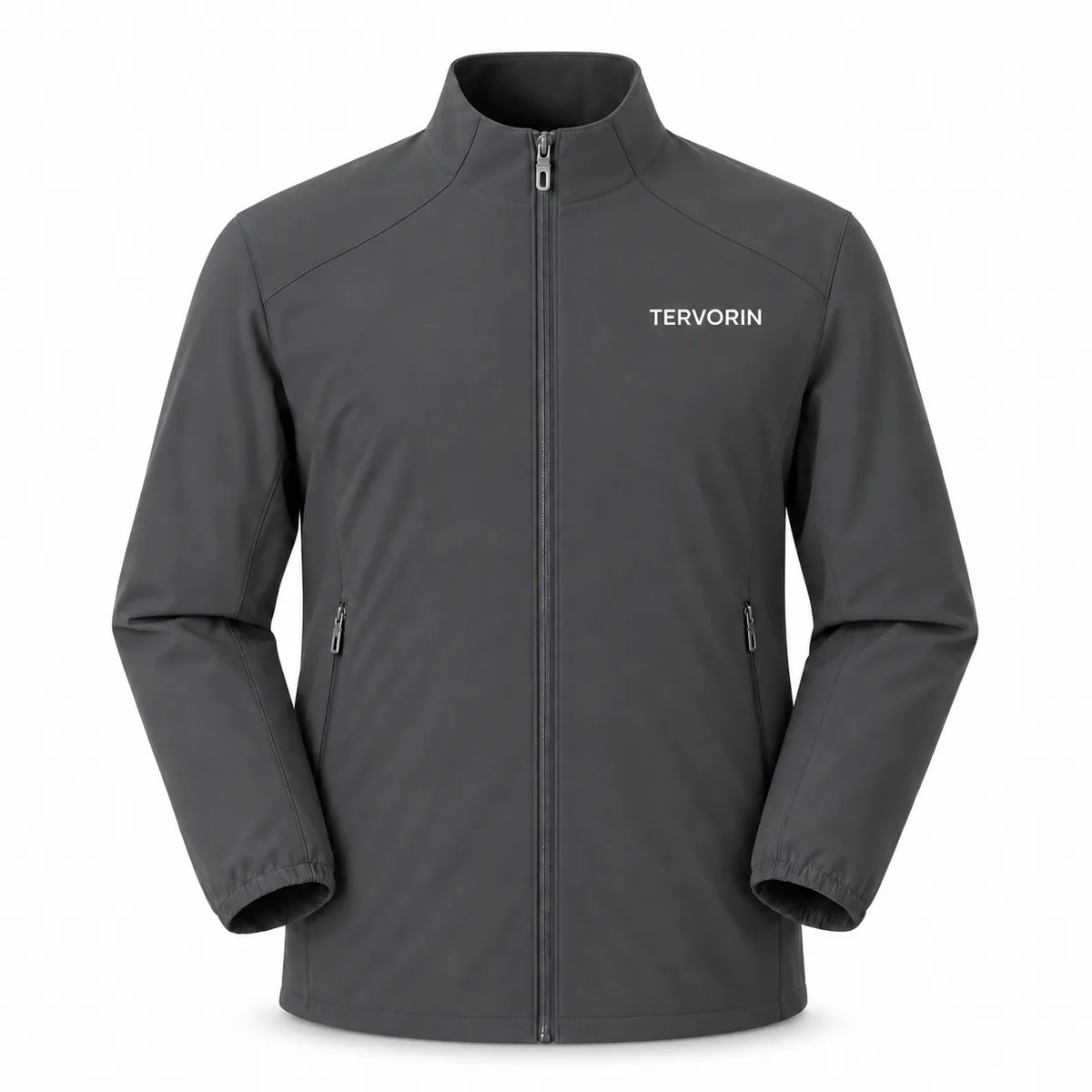
The light version is a color concept to discuss, rather than a statement that this exact combination is ready to ship. If your team prefers a hood, the same range also includes hooded reference styles. Start with the shape that suits the outfit, then agree the color, fabric, sizing and branding together.
Keep the Finished Outfit Easy to Wear
Try the jacket over the shirt or polo your team will actually use. Check the neckline when zipped and open, sleeve length when reaching forward, and whether the hem sits neatly when seated. There should be enough room for the intended layer underneath without making the silhouette unnecessarily bulky.
For the design itself, a plain jacket, one clear chest logo and coordinated trousers are a strong starting point. You can create a recognizable team outfit with just those few choices, then add further details where the job calls for them.