
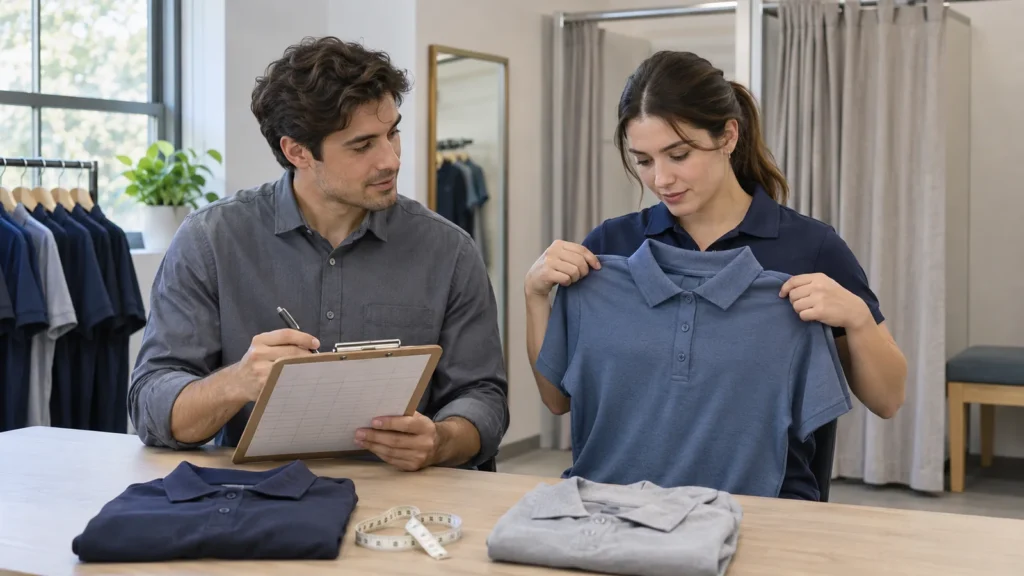
Collect a separate size choice for every garment each employee will receive. Give everyone the supplier's chart for the chosen style, check uncertain choices with a sample, and keep unanswered items on a follow-up list. Once the choices are confirmed, multiply them by the number of pieces issued and add spare garments on separate lines.
An employee may choose one size for a polo and another for a jacket worn over it. Pants may also need a waist size and an inside-leg length. A useful collection form keeps those answers together while giving each garment its own row, so a missing pants size stays visible even when the employee has already confirmed their top.
Prepare the charts before sending the form
Agree the styles and fits first. If the range includes two polo cuts, identify them separately in the form. Ask the supplier for the chart and measuring instructions for each one. Tervorin's fit and sizing service provides charts around the chosen garment and market.
Attach a dated chart to the collection request and keep its version in the file. If the supplier changes a fit or measurement, record which responses need another look. Use the size labels from the agreed chart throughout, including the final quantity list.
Make clear what each measurement describes. A body chest measurement goes around the wearer. A flat garment chest width measures across the finished shirt at the chart's stated points. Compare a body measurement with a body chart and a garment measurement with a garment chart. Ask the supplier about the intended fit allowance if the relationship between them is unclear. The measurement guide can help when someone wants to compare a uniform they already like.
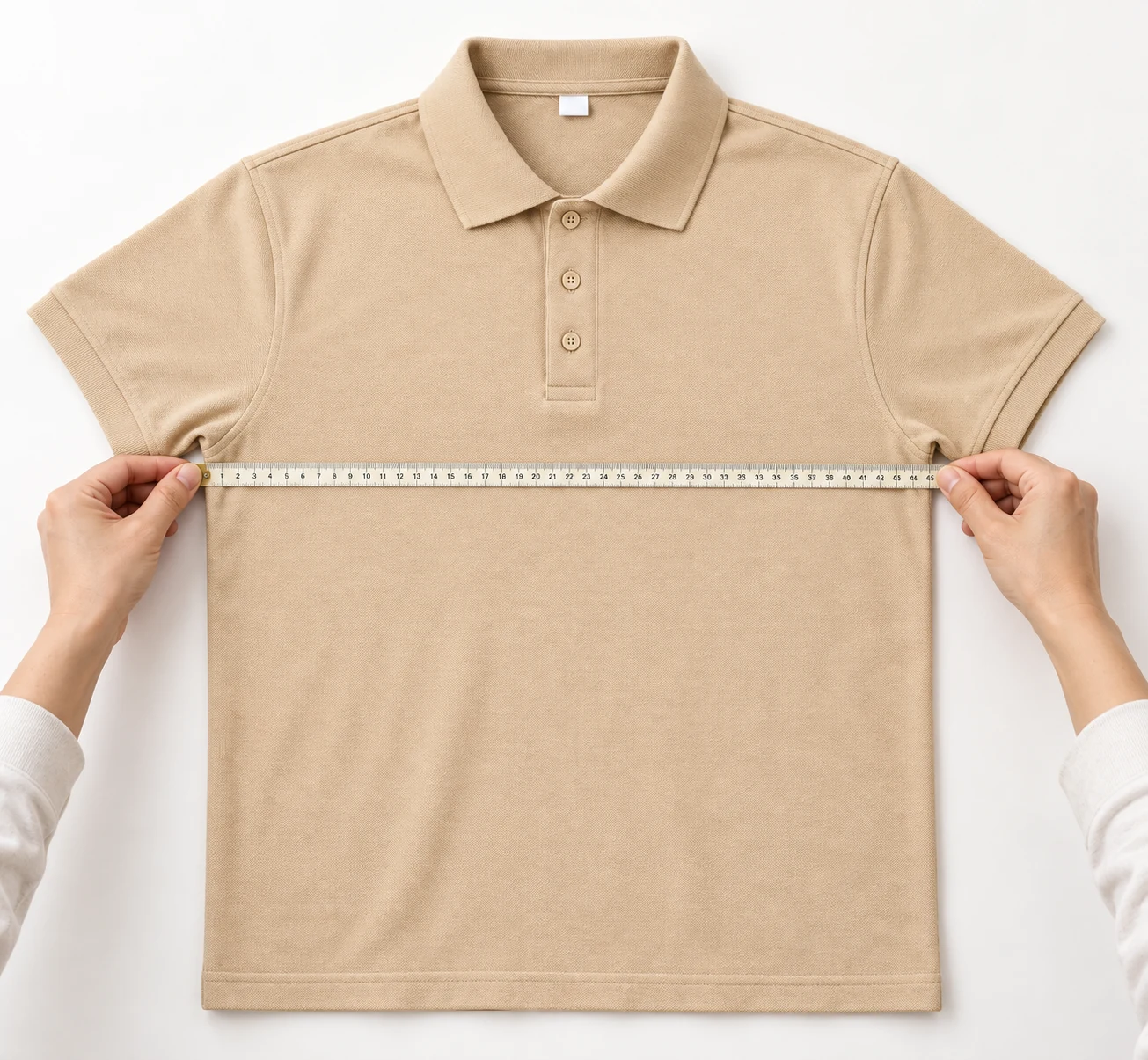
Before you send the request, settle the following details.
- Who receives each garment. List the people or staff IDs, their assigned styles and any optional layers.
- How many pieces they receive. Put the issue quantity beside each style, such as two polos and one pair of pants.
- Which units and lengths apply. State whether the chart uses centimeters or inches and how to choose an inside-leg or sleeve length when offered.
- When answers are due. Give employees a return date, a fitting opportunity and someone to contact about an uncertain choice.
Use one response row per employee and style
Here is a three-person extract from a larger order. The style letters, fits and sizes are fictional. Each person receives two Polo A tops and one pair of Pants B. E101 and E102 also receive one Jacket C each. Pants selections below show waist and inside-leg labels in inches. The form is still being collected.
Swipe to see the full table.
| Staff ID | Garment and fit | Size selection | Review state |
|---|---|---|---|
| E101 | Polo A, regular | S | Confirmed |
| E101 | Pants B, straight | W30, leg 30 | Confirmed |
| E101 | Jacket C, regular | M | Confirmed |
| E102 | Polo A, regular | M | Confirmed |
| E102 | Pants B, straight | W32, leg 32 | Confirmed |
| E102 | Jacket C, regular | L | Confirmed |
| E103 | Polo A, regular | M | Confirmed |
| E103 | Pants B, straight | — | Pending fit check |
| E103 | Jacket C, regular | — | Not issued |
Keep the staff ID attached to every row if you sort the sheet. For a larger workforce, also record the department or location for distribution. Put the response date, chart version and fit source in supporting fields. The fit source might be a supplier sample, a comparison with a well-fitting garment, or a chart-based choice awaiting review.
Use “Not issued” when the person will receive no garment in that style. A blank selection for an assigned garment remains pending. When an employee changes an answer, update that person's existing row and keep the previous choice in a dated note. Two active rows for the same person and style can create a duplicate in the supplier totals.
Resolve uncertain choices with a fitting
Try the collection process with a small group before sending it to everyone. Include people who use different fits or lengths and someone who will wear the jacket over a polo. Check that they can find the right chart and understand what the form asks. Fix unclear wording before the full collection starts.
Arrange evaluation samples for choices that need a closer check. Have staff wear the intended underlayers and try their usual movements. For the jacket, fasten it over the polo, then reach forward, sit and bend. Check the shoulders, sleeves and hem together.

For pants, check the waist and inside-leg length separately with the usual work footwear. A different leg length may solve the problem while keeping the chosen waist size. Record any fit adjustment for supplier review rather than fitting it into a size label that does not describe it.
Track unresolved rows with a short action, an owner and a follow-up date. For E103, the shift lead could arrange a Pants B fitting for the next shift and record the result. If the chart does not cover a wearer, keep the row pending while the supplier confirms an option. Include the styles, sizes and lengths you still need to check when you request samples.
In this example, E103 tries Pants B and confirms W32, leg 30. The coordinator changes that row to Confirmed, records the sample check and date, then closes the collection using the same chart versions. All eight assigned garment rows are now confirmed. The ninth row remains Not issued.
Turn confirmed choices into supplier quantities
Count the confirmed staff in each style, fit, size and length, then multiply by the issue quantity. E102 and E103 each receive two M polos, so that line needs four pieces. Their pants share a waist size but use different lengths, which stay on separate lines.
The summary below uses the completed three-person extract. Add one spare M polo and one spare L jacket as explicit planning choices for this example.
Swipe to see the full table.
| Style, size and length | Assigned pieces | Spare pieces | Total pieces |
|---|---|---|---|
| Polo A, regular, S | 2 | 0 | 2 |
| Polo A, regular, M | 4 | 1 | 5 |
| Pants B, straight, W30, leg 30 | 1 | 0 | 1 |
| Pants B, straight, W32, leg 32 | 1 | 0 | 1 |
| Pants B, straight, W32, leg 30 | 1 | 0 | 1 |
| Jacket C, regular, M | 1 | 0 | 1 |
| Jacket C, regular, L | 1 | 1 | 2 |
| Extract total | 11 | 2 | 13 |
Reconcile the extract with the issue plan. Three people receiving two polos accounts for six tops. Three pairs of pants and two jackets bring assigned pieces to eleven. The two spares bring this extract to thirteen pieces. Combine it with the rest of the roster and confirm the full quantities, style minimums and available options with the supplier.
Send the supplier the final quantity split with the agreed charts, fits and length details. Keep the employee allocation list for issuing the garments. Date the final version and nominate one person to coordinate later changes. If a confirmed selection changes, update the two records together so what you order matches what you plan to issue.