
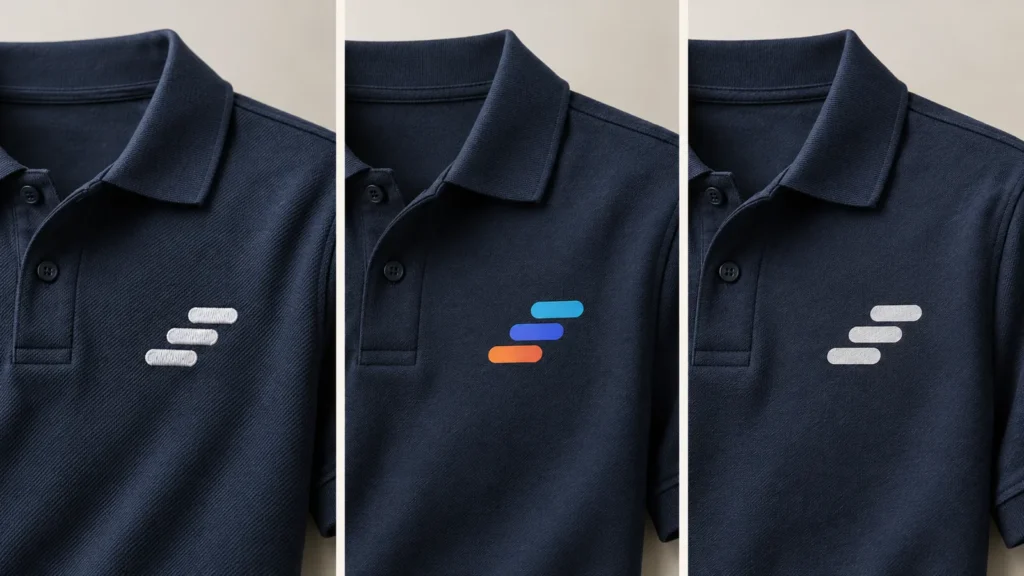
For a simple, small chest logo on staff polos, embroidery is a good starting point. For gradients, detailed color or a shorter run, compare a suitable heat transfer, such as DTF. For a larger order repeating a few solid colors, especially a back print, ask for a screen-printing quote.
Start with your logo, the polo your team will wear and how it will be used. Then compare the finish on a sample you can touch. A method that suits one logo may be less helpful for another.
A quick way to narrow the choice
| What you need | Start by considering | Check before approving |
|---|---|---|
| A neat, textured chest logo for everyday staff uniforms | Embroidery | Small lettering, fabric puckering and comfort on the inside |
| A colorful logo with shading, a gradient or fine detail | A suitable full-color heat transfer, such as DTF | Detail at the final size, print feel and compatibility with the polo |
| The same simple design across a larger order | Direct screen printing | Total setup cost, ink feel and color matching |
| A small chest mark plus a larger back graphic | A different method for each position, if helpful | How the two finishes look together and feel when worn |
Any of these can give your team a professional finish. The useful differences are in the artwork, feel and cost of your particular order.
Embroidery: a classic choice for small chest logos
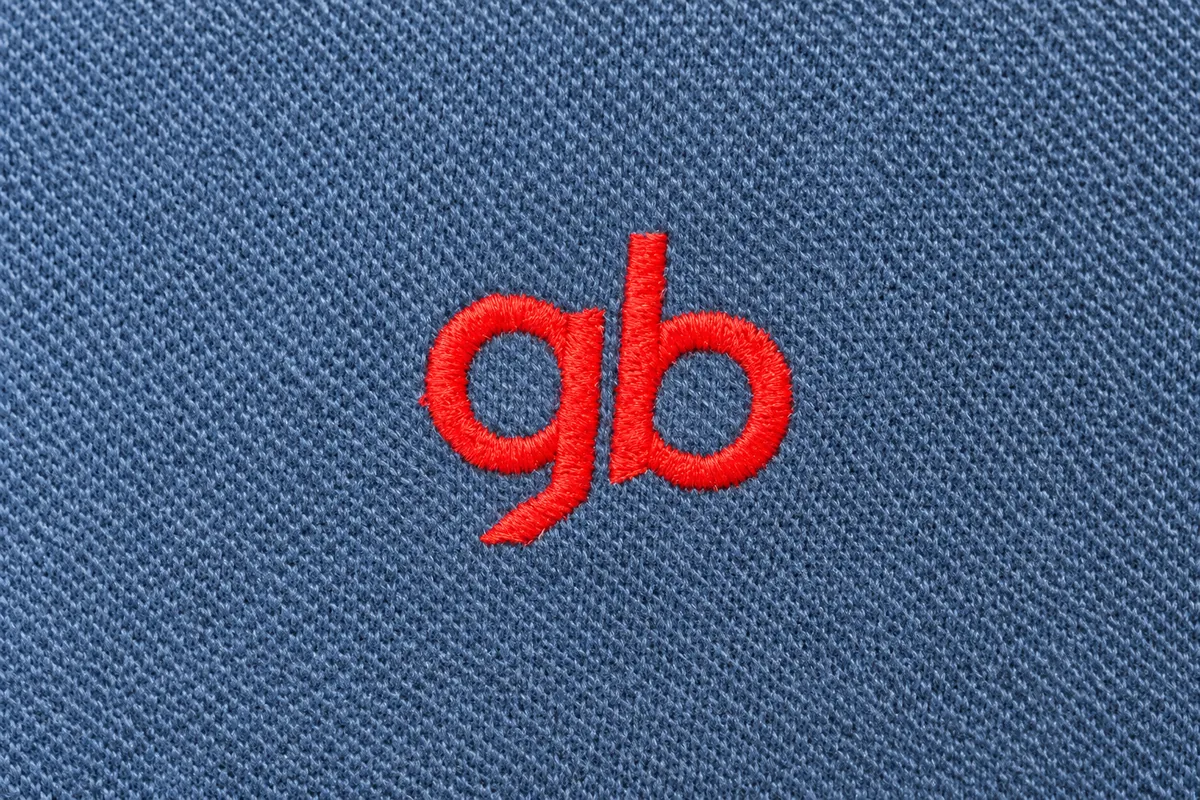
Embroidery forms the design with thread stitched into the garment. The raised surface gives a simple mark or company name a familiar uniform look, particularly on a medium-weight polo that supports the stitching well.
It works best when the artwork has enough space to stay readable. A tiny slogan that looks sharp on a screen may disappear when stitched at chest-logo size. Fine outlines, close-set letters and smooth shading may need simplifying. Ask for a proof with the intended logo width marked, then check the small lettering on the decorated sample.
There are two practical checks buyers sometimes miss:
- Look around the logo. The fabric should sit neatly, without obvious pulling or ripples.
- Feel behind it. Embroidery normally needs stabilizing material on the inside. Check that this area feels comfortable against the skin, especially on a light summer polo.
The supplier turns the artwork into a stitch file and chooses backing to support the fabric. As Madeira's guidance on puckering explains, fabric support and stitching setup matter. On a light, stretchy polo, keep the design manageable and pay particular attention to these checks.
Heat transfer: useful for color and flexible artwork
Heat transfer applies a prepared design with heat and pressure. It includes DTF, cut heat-transfer vinyl and screen-printed transfers. DTF means direct-to-film: the design is printed onto film before being transferred to the garment.
For a logo with several colors, shaded artwork or a gradient, a suitable full-color transfer can preserve the design more easily than converting everything into stitches. It is also worth comparing for shorter runs, because digital transfers do not need a separate printing screen for every color.
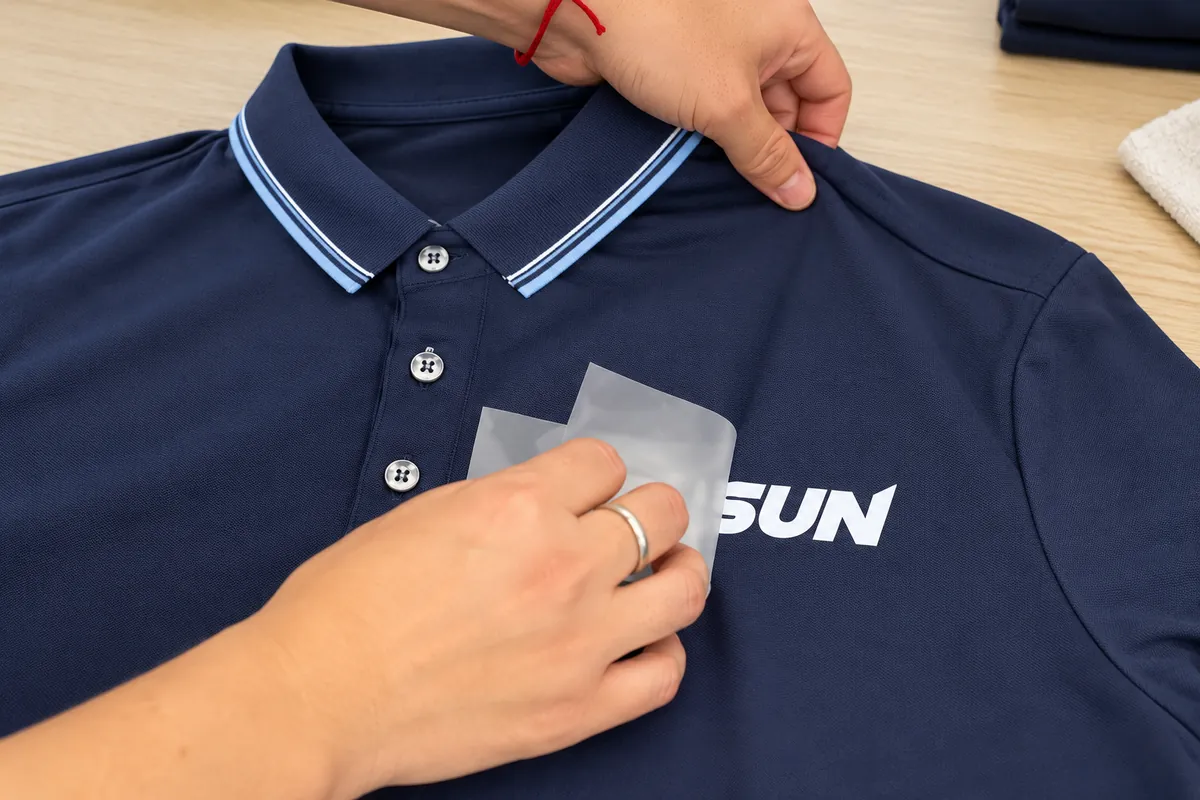
The feel varies. Some transfers are thin and flexible; others feel more substantial. A small chest mark leaves most of the shirt uncovered, while a large solid design can feel noticeably warmer or less flexible. Touch the finished print and gently move the fabric as it would move during wear.
If a particular brand color matters, approve it on the chosen shirt. Full-color printing gives you plenty of design freedom, but an on-screen color is only a reference for the finished result.
For daily uniforms, ask which transfer material suits the polo and your wash routine. A good fabric match and correct pressing matter as much as the artwork.
Screen printing: compare it for repeat designs and larger runs
In direct screen printing, ink is pushed through a prepared mesh screen onto the garment, then cured to set it. This section covers that direct process; screen-printed transfers are made on a carrier and applied later with heat.
Screen printing is worth pricing when many polos repeat the same design with a limited number of colors. Setting up the screens takes work, but that setup can be spread across the order. It is a practical option to compare for a larger back logo or team graphic.
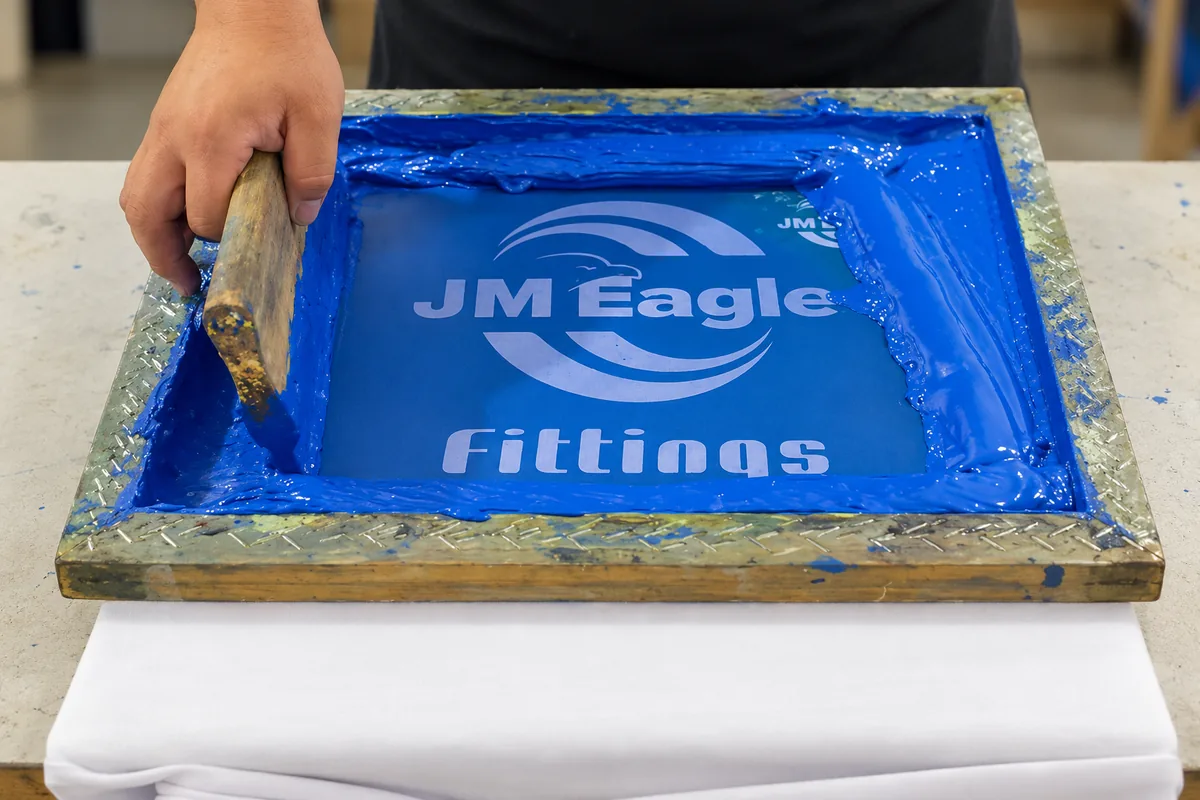
Ink choice, coverage and the layers needed on a dark shirt change the feel. A large solid design may feel quite different from a few separate letters, so compare the proposed finish on the actual polo fabric.
Screen printing can also reproduce gradients using halftones—shading built from small dots. For many colors or a photo-style design, compare the result and quote with a full-color transfer. For a simple solid-color logo, ask about matching the ink to your brand color.
The polo and the logo size can change the answer
Piqué polos have a textured surface; other polos have a smoother knit. That texture can affect how a fine printed line looks. A light, stretchy performance polo also behaves differently from a more substantial cotton blend. If you are still choosing the shirt itself, our staff polo fabric guide is a useful first step.
For polyester, ask whether the proposed decoration suits that fabric and color. Heat can leave marks on some fabrics, and fabric dye can migrate into a light-colored print, changing its color. This matters for both transfers and direct screen printing. The supplier should select suitable materials and settings, then check the sample for color changes as well as its initial appearance.
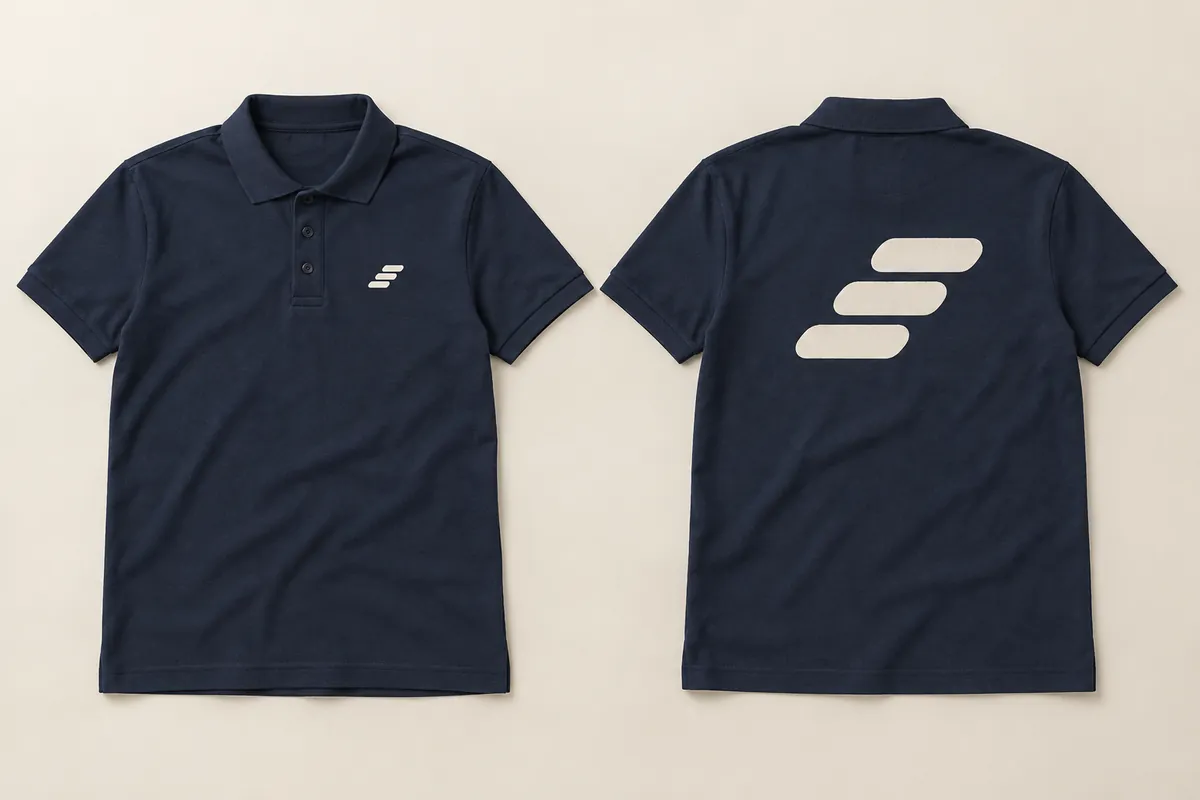
For summer uniforms, think about coverage as well as technique. A design with space between its elements may feel better than a large solid block. Dense embroidery, a substantial ink layer and a large transfer can each change how that area of the shirt feels.
You can also combine methods: a small embroidered chest logo and a printed back graphic, for example. Choose each finish for its position and size.
Compare the whole quote
Embroidery pricing reflects design preparation, size and stitching time. Screen printing includes screen and color setup. Transfer pricing depends on the material, image area, quantity and application. Artwork and samples may add to the total for any method.
For a useful comparison, ask for the same polo, quantity, logo size, colors and positions, with setup, samples and delivery clearly identified. If a repeat order matters, ask what can be reused and what needs setting up again.
At Tervorin, existing styles with your logo start from 20 pieces per style, with mixed sizes. Fully custom garments start from 100 pieces per style. These quantities apply to the garment order route; we confirm the suitable decoration and its price from your design and requirements.
What about washing and long-term use?
All three methods can suit regularly worn uniforms. There is no single wash count for an entire method: the materials, application and washing conditions affect how the finished logo holds up.
Ask for care instructions that suit both the polo and its decoration. If your uniforms go through a commercial laundry, share its washing and drying process before a method is selected.
Wash a decorated sample using the intended routine, then check its appearance and comfort. Look for puckering or loose stitches with embroidery, and lifting, cracking or unwanted color change with prints.
Send the logo, then approve the details
Send your best available artwork, approximate quantity, preferred polo and logo positions. Include the intended logo width if you know it, your brand-color reference and how the team will wash the shirts. Our artwork guide explains how to prepare the files.
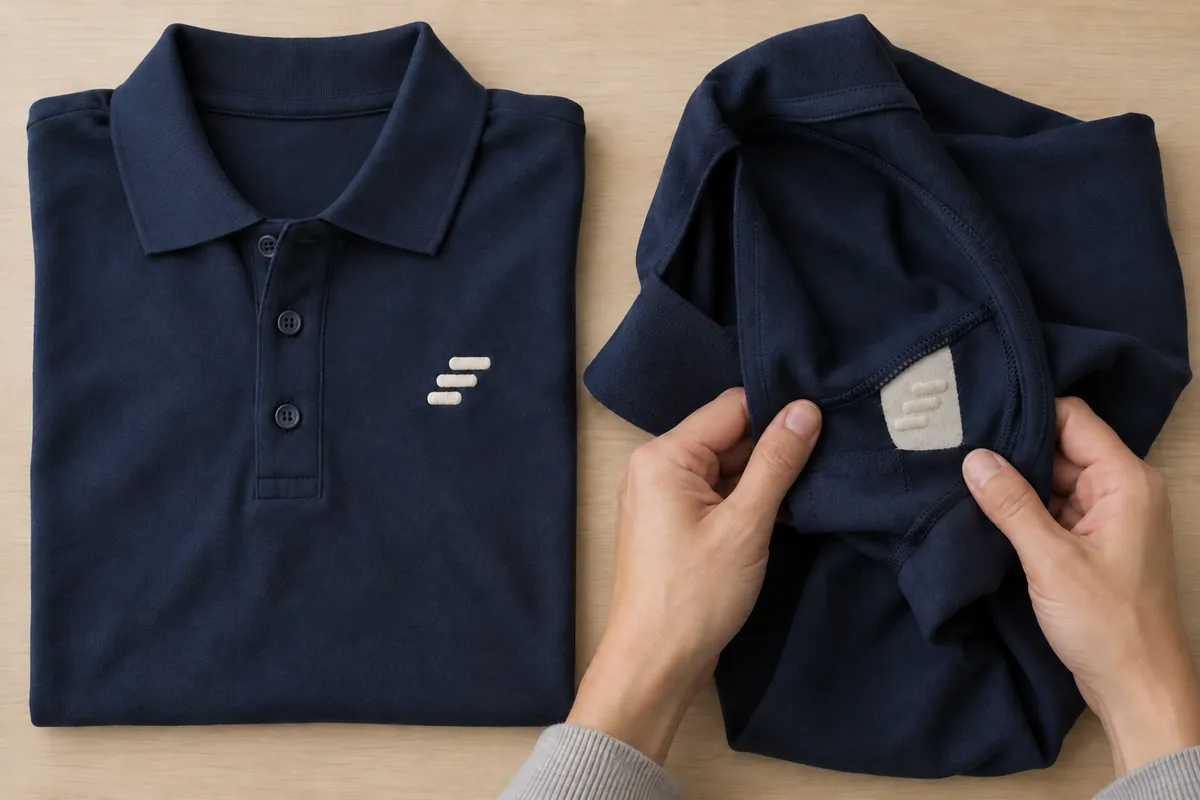
A digital mockup helps you agree on position and scale. A decorated sample adds thread texture, print feel and inside comfort to the decision. Check the lettering, color and placement, then keep the approved reference with your order details.
You can start with a simple brief: “We need navy staff polos with this logo on the chest. The team wears them daily and washes them at home. Please compare a suitable embroidered and printed option, including setup and a decorated sample.”
Send Tervorin your logo and polo requirements. We can help narrow down a suitable method and confirm the sample arrangement and full quotation before you place the order.