

Give reception, inspection and maintenance teams a few shared visual cues, then choose the clothes around their work. A company mark in a consistent position, a coordinated color range and a clear name or role badge can link a reception shirt to an inspector's polo and a maintenance jacket. Plan for what stays visible when someone adds a layer.
Start with the properties your team manages. A small residential lobby, a busy commercial reception desk and an outdoor inspection route can call for different clothing within the same company. Write down who meets residents or tenants, who moves between sites and who carries tools. Then decide which parts of the outfit everyone should recognize across those settings.
Start with the work each role does
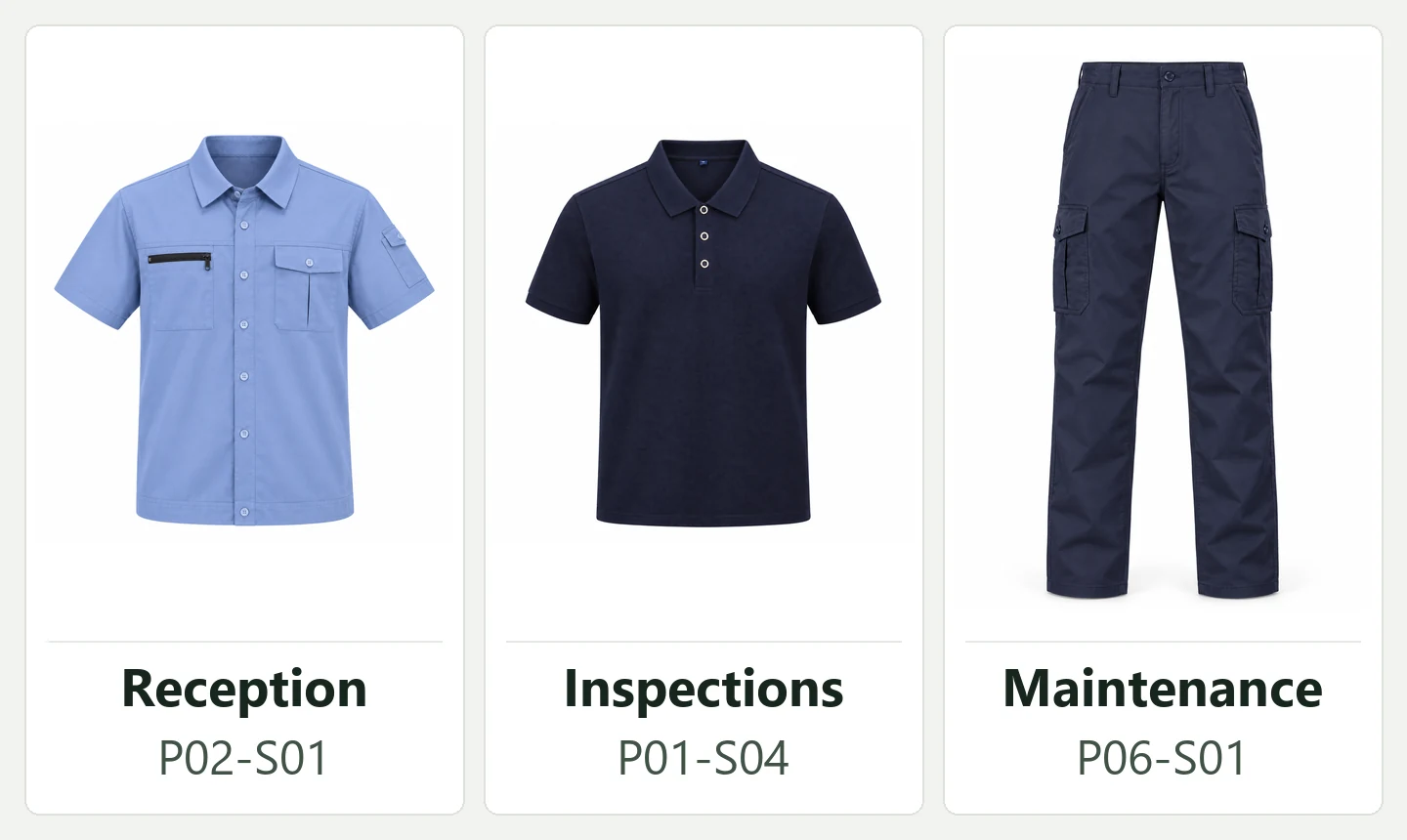
For a practical property service team, a shirt can suit reception, a polo can provide a straightforward top for inspections, and work pants with appropriate storage can support maintenance. Let people try those choices in their own work areas before you choose a whole range.
Swipe to see the full table.
| Role | Starting garment | Check during the working day |
|---|---|---|
| Reception | Button-front shirt with agreed pants or skirt | Sitting at the desk, reaching across the counter and standing to greet visitors |
| Inspections | Polo with work pants and a removable jacket when needed | Walking between buildings, using a phone or tablet, and moving between indoor and outdoor areas |
| Maintenance | Work shirt or polo with pants chosen for the tools carried | Reaching, bending, sitting and returning to a tenant-facing area after a task |
Tervorin's work shirt reference P02-S01 is a light blue, short-sleeve button-front direction with a turn-down collar and chest and sleeve pockets. It can start a practical reception outfit where those details suit the setting. For a quieter front, discuss the pocket layout when choosing the shirt.
The navy polo reference P01-S04 has short sleeves and light-edged placket buttons. It gives inspections a different garment shape while retaining a navy element elsewhere in the range. For maintenance, classic cargo reference P06-S01 has side-entry pockets and flap pockets on both legs. Match their use to the items the wearer carries. Final colors, fit and details are agreed on the sample.
The full outfit matters more than any one piece. Ask the receptionist to sit at the actual desk height. Have an inspector carry their usual phone, tablet or notebook during the trial. For maintenance, include the movements and tool-carrying arrangement the team already uses. Record a problem against the garment and task, such as a shirt hem pulling out when reaching, so the next sample addresses it.
Follow the person who moves between roles
Use a common handoff during the clothing trial. For example, reception takes a resident's report about a sticking communal door and passes the work order to the inspector. The inspector brings a jacket for the outdoor section of the route, then hands the follow-up to maintenance. Check whether a colleague acting as the resident can still identify each person's company and role, including when the jacket is zipped or the inspector is holding the folder.

Swipe to see the full table.
| Change during the day | Clothing decision to settle |
|---|---|
| Reception cover, then outdoor rounds | Where the jacket is kept and whether the name or role remains visible when it is put on |
| Inspection round, then a tenant meeting | Where devices go so the hands and front of the outfit are clear for the conversation |
| Maintenance task, then a lobby visit | Which clean layer or spare top is available if the task leaves the uniform marked |
For people who rotate regularly, approve a combination they can wear through the day and a clear way to add or change a layer. Choose the inspection polo or reception shirt according to the setting they return to most often. Ask whether the person has a place to store a jacket and whether laundry arrangements make the proposed changes realistic.
Keep the same company and role wording across the issue list, badges and spare garments. If reception calls someone “Property Services” and the badge says “Maintenance,” decide which description your company wants residents and tenants to use.
Keep a shared identity visible
Choose a small set of cues that can work on every role's clothing. You might use light blue reception shirts with navy bottoms, navy inspection polos and navy maintenance jackets. A common light chest mark can tie the darker tops together, with a darker version of the same mark on the light shirt. That gives the company a consistent relationship between colors while allowing different clothes for different jobs.
Decide which company name should appear. A management company operating several properties may use its own mark across the range, with a property name on a replaceable badge. A team dedicated to one development may want that property's identity on the clothing. Agree this before making artwork so the same employee can move to another site without being issued a different shirt for every assignment.
Make four decisions for the whole range.
- Color roles. Identify the main garment colors, the accent and which role uses each. Give the supplier a physical color reference to compare across the shirt, polo and jacket materials.
- Company mark. Choose a clear area, such as the wearer's left chest, and check the artwork against pockets, seams and the front opening on each style.
- Name or role information. Decide whether people need a company name, first name, job title or site name visible. Keep the information that helps a resident or tenant address the person.
- Outer layers. Repeat the company mark on the jacket if it normally covers the shirt. Identify a suitable place for the badge when the jacket is fastened.
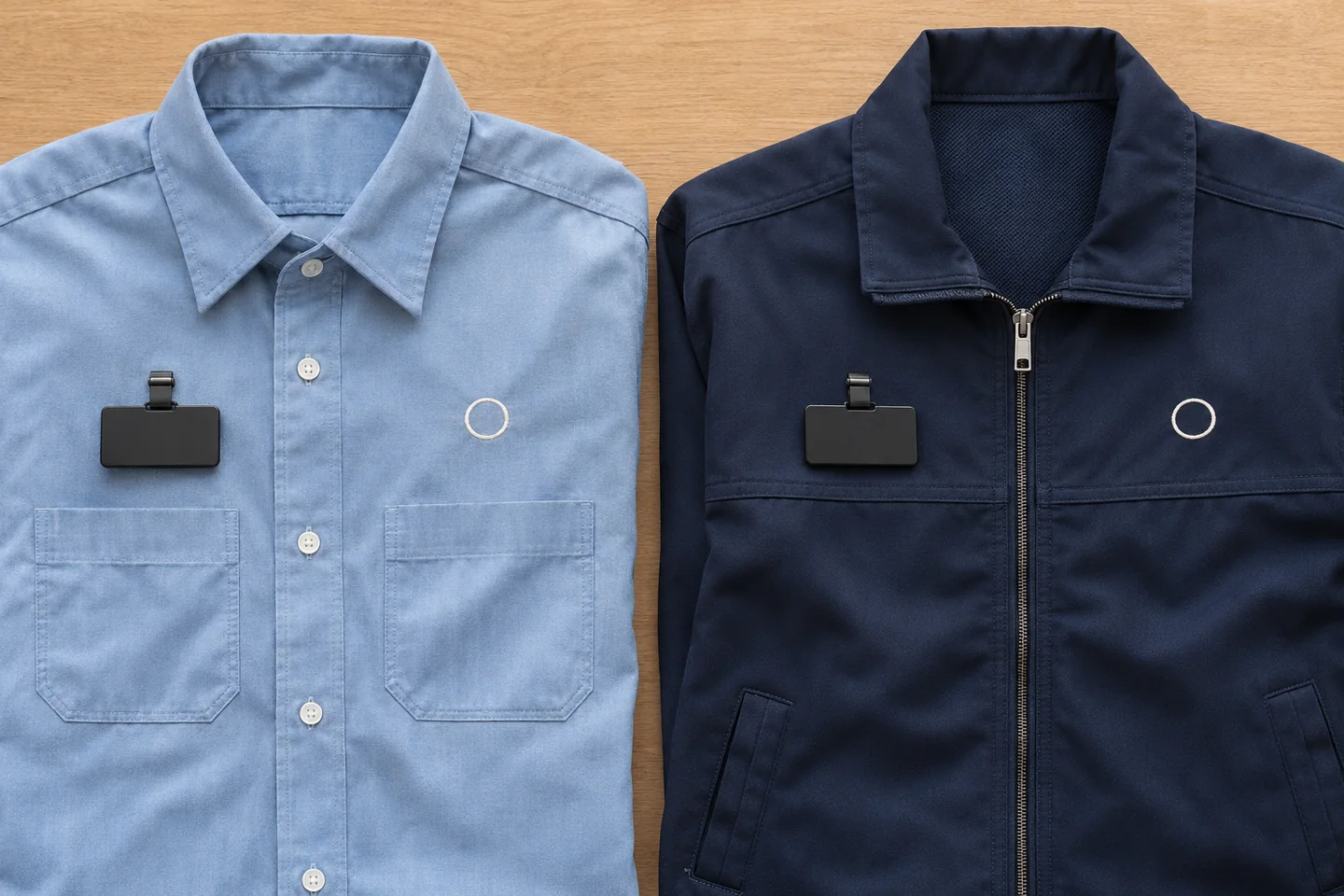
Review the garments together in the lobby and corridor lighting where people will see them. Put the approved fabric samples side by side and agree a target for each material. A smooth shirt, textured polo and jacket can show the same color direction differently. Check that the mark remains easy to make out against each background. For any wording, use the actual proposed text and size in the sample check.
If the company mark occupies the left chest, a clipped badge on the other side can keep both items visible. Try it with the jacket open and closed. Use the attachment that suits the garment and check that the badge stays facing outward during normal movement. Check the actual lettering from the other side of the reception counter. Discuss attachment options alongside the clothing. Tervorin name badges and ID accessories
Order one range across several properties
Prepare a sample set that shows the colors and branding together, then send the relevant garments through each property's wearer check. A representative from reception, inspections and maintenance should each report what works at their site. Separate fit comments from requests to change the shared design. A longer shirt for one wearer need not change the approved color or chest mark for the group.
Keep one approved style record with the garment references, fabric and color samples, mark artwork, badge wording and jacket arrangement. Add a property allocation sheet listing each site's roles, garment sizes, quantities and spare stock. Identify who approves any local variation so an urgent replacement request stays tied to the agreed range. Packing can be grouped by team or location when arranged with the order.
Use Tervorin's cleaning and property service uniform options to build a first set. Send the number of properties, the roles at each site, preferred garments and the company identity you want people to see when you request samples.