
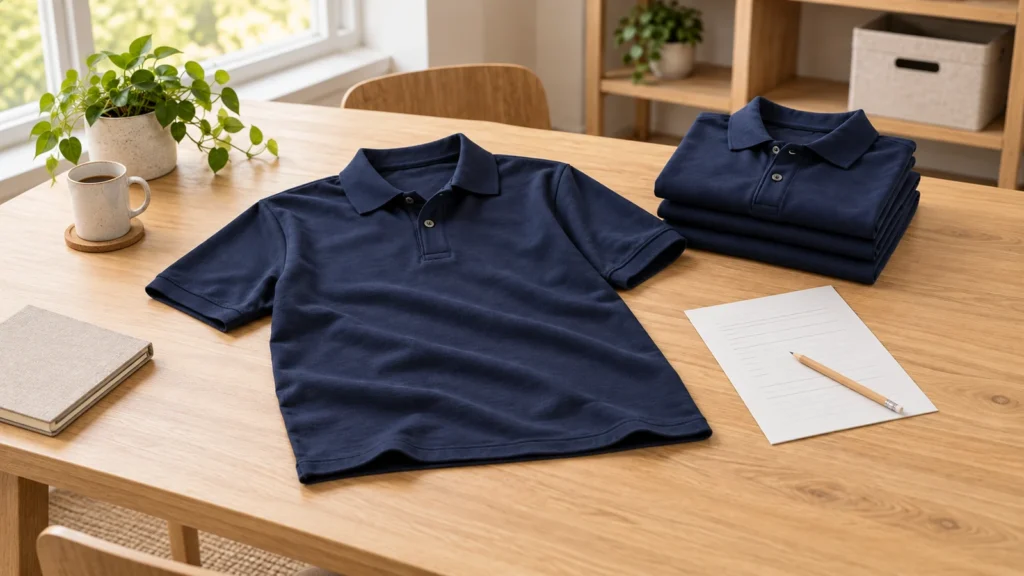
If you need only a handful of logo shirts, start by comparing a local decorator using readily available garments with a supplier offering small orders. Commissioning a new garment design usually makes sense only when you need features that an existing shirt cannot provide.
At Tervorin, adding your logo to an existing style starts at 20 pieces per style, with mixed sizes. That quantity spreads preparation costs across a useful batch. For a genuinely smaller requirement, local decoration or a suitable DIY option may cost less overall, even if each finished shirt costs more. First work out how many shirts your team will actually use.
Why a small logo can still have a setup cost
A minimum order quantity, or MOQ, is the smallest order a supplier accepts for the specified product or job. It reflects how that supplier organizes materials, preparation and production. There is no single minimum that is right for every decoration method or business.
Even a small chest logo needs usable artwork, an agreed size and position, and a process suited to the garment. Some of that work happens before the first finished shirt exists.
Swipe to see the full table.
| Method | What may need preparing | What to clarify in the quote |
|---|---|---|
| Direct embroidery | A stitch program, often called digitizing, plus a trial and machine setup | Is digitizing included, and can the approved file be reused for the same design? |
| Molded PVC patch | A mold for the design, patch production and an attachment method | Are tooling, the patch minimum and attachment priced separately? |
| Heat transfer | Depending on the product: artwork preparation, digital transfer production or screens, followed by heat application | Which transfer process is being quoted, and what setup or minimum applies? |
Heat transfer is a family of processes. A digitally printed transfer does not automatically need a dedicated mold, while a screen-printed transfer has different preparation. A supplier may include that work in the unit price, charge it separately or set a minimum batch. For example, Transfer Express offers UltraColor Max digital transfers with no minimum quantity; the garment supplier may still set its own order minimum. “No setup fee” does not mean there is no preparation work.
Consider an illustrative $60 preparation charge: spread over three shirts, it adds $20 per shirt; over 20, it adds $3. Those figures exclude garments, application and delivery, and are not a Tervorin quotation. They explain why the same logo can have a different effective cost at different quantities.
There is also work attached to the order itself: checking artwork, setting up the job, sorting sizes, inspecting the result and packing a shipment. Reusing an approved logo file can save part of the preparation without removing those tasks. This is one reason a repeat order can still have a minimum.
A fully custom garment adds another layer: patterns, fit samples, fabric and trim sourcing, cutting and sewing arrangements. A fabric or trim supplier may also have its own minimum. Choosing an existing style avoids some development work, but does not remove every order cost.
When local decoration is the practical choice
Local embroidery or print shops can be a good fit when you need very few pieces, want to try on available garments or need replacements without arranging a larger shipment. Some businesses accept single items. Their service can be worthwhile even when the per-shirt price is higher; compare the total you need to spend to obtain the shirts you will use.
Ask whether the decorator supplies the garments or accepts customer-supplied blanks before buying anything. Check which fabrics and logo methods they support, whether setup is included, and how they handle a garment damaged during decoration. A blank that looks inexpensive online may be unsuitable for the chosen process.
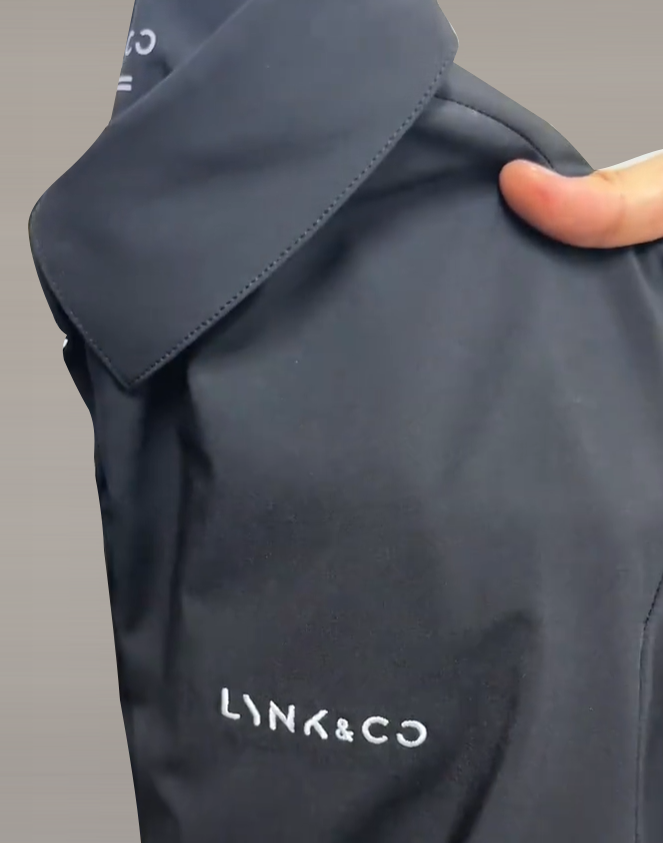
The supplied close-up shows how a modest chest mark can give a plain dark shirt a branded appearance. For this kind of brief, start by checking an existing garment before commissioning a new collar or pattern. Specify the mark’s size and application method when requesting a quote.
What Tervorin’s 20-piece minimum covers
Our existing-style service starts with a garment design already in the range and adds your logo. The 20-piece minimum is per style, and the order can include different sizes. For example, 4 S, 8 M, 6 L and 2 XL make 20 pieces of one style. Use the selected style’s size chart to set your own mix.
Mixed sizes do not automatically mean mixing unrelated styles or any combination of colors. Confirm the style, color, logo method and positions together. An existing design also does not necessarily mean every size is sitting in stock for immediate dispatch.
Twenty pieces is a practical starting point for this service, rather than a universal lowest-cost quantity. It helps share order preparation across a batch while allowing a small business to plan several shirts per wearer. Fully custom styles have more development requirements: our ordering guide currently lists a starting minimum of 100 pieces per style, with the proposed fabric and details still subject to confirmation.
Can blank shirts and iron-on logos work?
Buying plain shirts and adding a custom embroidered patch with heat-activated backing, or a suitable transfer, can be another route for a very small team. The important part is buying a decoration product that explicitly supports your garment and the equipment you have.
A household iron is an option only when the specific product’s instructions permit it. Siser’s EasyWeed instructions are one example that includes home-iron application for a heat-transfer vinyl. Some products instead specify heat-press application with controlled temperature, time and pressure. A patch described as “heat seal” is not automatically suitable for a home iron. Check compatibility with the fabric and care label, and use the supplier’s application and washing instructions rather than a generic online recipe.
Artwork also matters. Very small lettering or fine lines may need simplifying for an embroidered patch; other transfer products have their own detail, color or fabric limitations. Ask about the minimum for the logos themselves, not just the blank shirts.
Try one garment first, inspect the result and wash it as instructed before decorating the rest. Include the patch or transfer order, shipping, any application tools, your time and a possible spoiled shirt in the cost. DIY gives you another way to obtain a few branded garments; it does not guarantee the cheapest finished result.
Count shirt changes as well as people
A three-person shop needs a rotation plan as well as a headcount. Work out how many clean shirts each person needs between laundry cycles, then allow for drying delays, stains, damage and realistic staff changes.
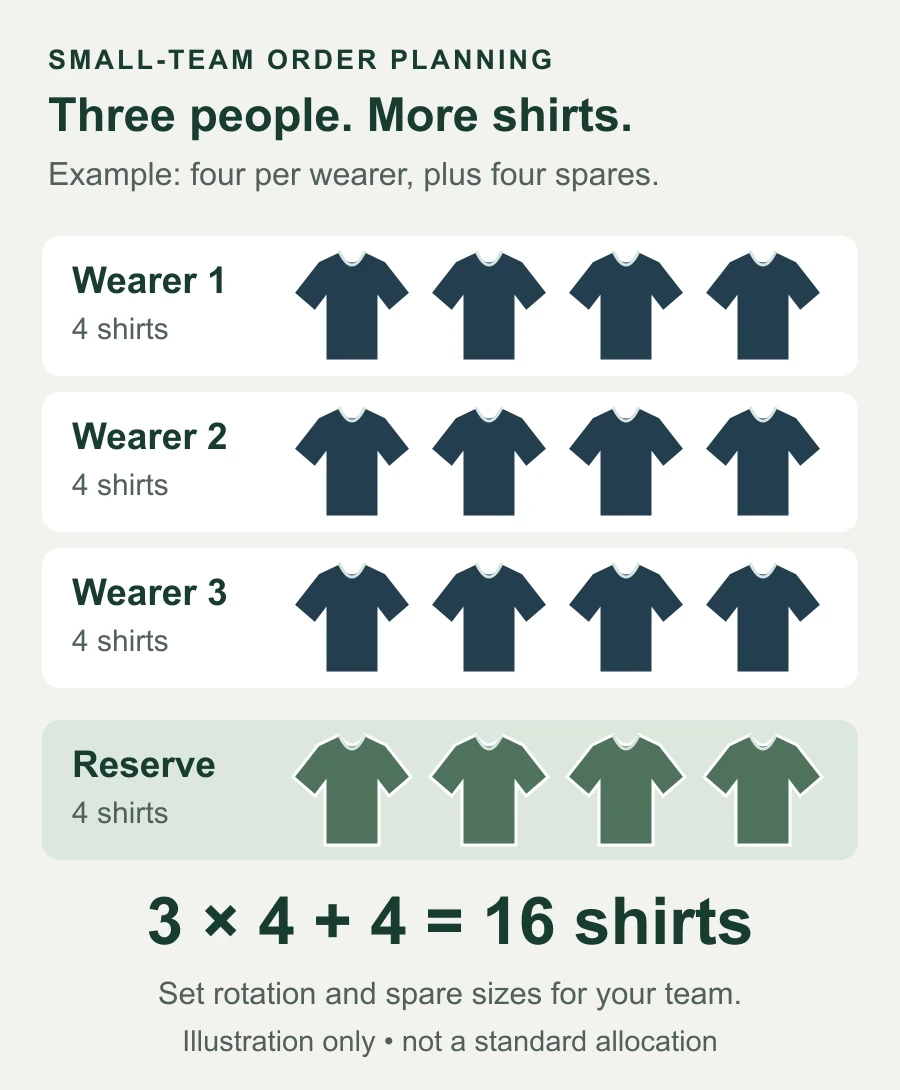
For example, suppose each of three employees needs four shirts in rotation, and the business chooses four additional replacements across the sizes it expects to use. That is 3 × 4 + 4 = 16 shirts. This is a planning example, not a recommended allocation for every team. More frequent laundering may reduce the rotation; long gaps between washes or frequent clothing changes may increase it.
That 16-shirt plan is still below our 20-piece minimum. Compare a local 16-piece quote with a 20-piece order only if the additional four garments have a realistic use. A lower unit price does not help if the extra stock sits unused.
For a planned hire, add a full wearer allocation once their size is known. For uncertain turnover, keep a modest reserve based on likely sizes and replacement lead time. Twenty shirts in the wrong size mix will not solve a staffing change. Leaving some suitable blanks unbranded can preserve flexibility when a dependable local decoration route is available; it is an option to arrange, not an assumed Tervorin service.
Keep the style code, approved size breakdown, logo file, placement and earlier order reference. Our repeat-order guidance explains that usual minimums still apply to top-ups, and materials, price and timing need checking again. Do not plan around buying one identical replacement on demand unless the supplier has agreed that service.
Compare the complete order before deciding
Ask each supplier to quote the same shirt specification, size mix, logo size and position, quantity and delivery destination. Put garment and decoration costs beside preparation charges, samples, shipping and any destination charges not included. For a repeat order, ask which files or tooling can be reused and which setup work would be charged again.
Use local decoration when it best fits the small quantity you genuinely need. Consider an existing-style batch when your rotation and reserve plan justify it. Move to full custom development when the garment itself needs changing and the order can support that work.
To discuss a Tervorin order, send your chosen style or reference, logo, estimated quantity, size mix and required arrival date. We can then check which route fits the requirement and what the quotation needs to include.