

Employees should wear a shared uniform when customers need to recognize them, when the team represents your business away from the workplace, or when particular jobs call for consistent work clothing. For a team that mostly works behind the scenes, a few clear dress guidelines may be enough.
Start with the problem you want to solve. You might need an easy way to identify staff in a busy shop, a consistent appearance for home visits, or suitable shirts for a team that moves between a workshop and customer meetings. That problem should decide how much clothing you standardize and what you buy.
What would a uniform help your team do?
Picture an ordinary working day. Where would a shared appearance make something easier?
- Help customers find a staff member. A recognizable shirt, apron or jacket gives people a visible cue in a shop, showroom or event space. Choose the part of the outfit customers can actually see. A chest logo covered by an apron contributes little to that cue.
- Keep the team recognizable across locations. Staff visiting homes, working at exhibitions or moving between branches can use a shared color and mark. A visible name or company badge can add information when a shirt alone leaves the visitor's role unclear.
- Make everyday clothing choices clearer. An issued range gives staff something specific to wear. It also gives the business responsibility for keeping suitable sizes, replacements and new-starter clothing available.
If your concern is simply that some office outfits feel too casual, describe the expected clothing and give a few examples. A full uniform program brings purchasing, laundry and replacement decisions with it. Match that commitment to the work your team does.
Choose how much of the outfit to coordinate
There are several workable levels of uniformity. You can begin with one and expand it when the team has a reason to do so.
Swipe to see the full table.
| Approach | What the team shares |
|---|---|
| Simple dress guidelines | Written examples of suitable tops, trousers, shoes and layers, with room for individual choices |
| A branded item | An issued polo, apron, badge or jacket, worn with agreed basics |
| An issued clothing range | Coordinated tops, trousers and layers, with approved options for different tasks and wearers |
For a small customer-facing team, one recognizable upper-body item is often a practical starting point. For example, a café might issue the same apron and agree on suitable shirts underneath. A showroom might choose a navy polo with a small light-colored chest logo and dark trousers.
An issued range becomes more useful when people need several pieces of work clothing throughout the week or move between different tasks and temperatures. Work through the garments one at a time. A common shirt color does not require you to choose every employee's belt, trouser cut and outer layer.
Keep a shared identity while allowing different clothes

You can make a team look coordinated through a small set of repeated details. Choose a main color, a logo treatment and a clear location for that mark. Then select garments that suit each role.
A service business could put its reception staff in polos, its visiting team in work shirts and its delivery staff in light jackets. The same color family and readable chest mark tie the range together. Check the garments side by side because a woven shirt and a knitted polo can show the same color differently.
Give wearers a choice where it helps them work comfortably. That might mean two cuts, a suitable longer sleeve, or an extra layer for a cooler work area. Each option should fit into the same overall appearance. For jobs with specific protective-clothing requirements, use those requirements to select the garment before deciding on branding.
Ask employees to try the clothes during real work
Bring a few options to the team before placing the full order. Ask staff what they reach for, carry, sit on or wear over their shirts. A top that looks tidy while standing can pull at the shoulders when someone reaches across a counter.
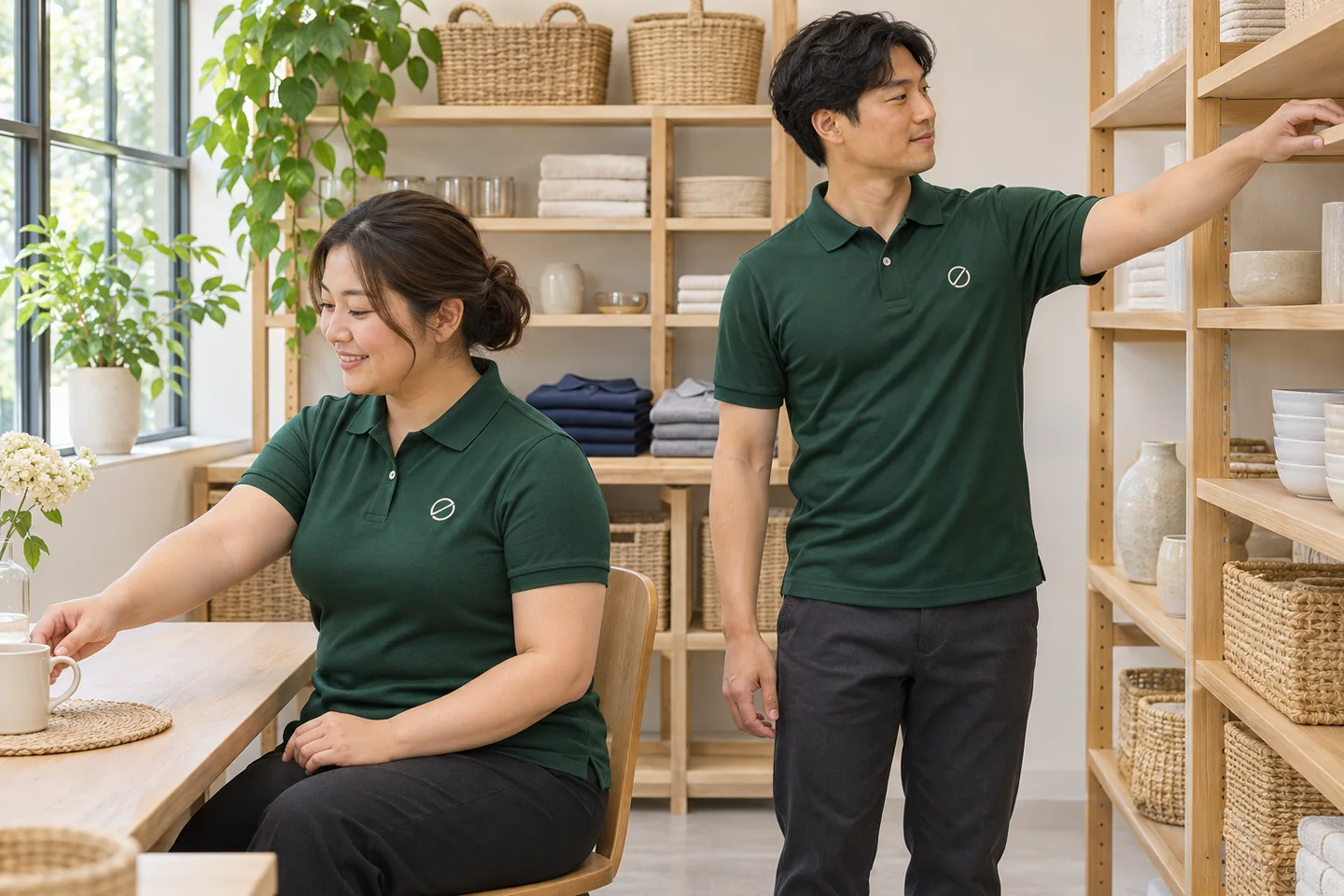
Choose trial wearers from different roles and across the size range. Have each person try their expected size in the proposed cut. Give them a few concrete things to report.
- Can they reach, bend and sit comfortably?
- Does the shirt work with an apron, jacket or other equipment?
- Does the fabric feel comfortable through a representative shift?
- Can customers see the identifying color and mark?
- Does the garment still fit and look acceptable after the usual wash and dry routine?
Discuss individual comfort and fit needs privately when appropriate. Record the size and cut people actually approve, alongside any changes needed. A comment such as “the sleeve pulls when I reach the top shelf” gives you something specific to fix.
Use the supplier's garment measurements and style-specific chart. Our fit and sizing guidance explains what to send when asking for samples and size options.
Budget for a usable supply of clothing
The price of one shirt is only part of the decision. Staff need enough clothing to cover shifts while used garments are being washed and dried. You also need a way to replace a damaged item or dress a new starter.
Here is a simple first-issue example for ten employees. These are assumed figures for planning, with one logo included in the shirt price.
- 10 employees × 3 shirts × $20 = $600
- 5 spare shirts in selected sizes × $20 = $100
- Assumed sample and setup costs = $60
- Assumed delivery = $40
- Initial total = $800, or $80 per employee
The three-shirt allocation is an assumption in this example. Set your own quantity from the number of shifts between washes, drying time and access to spares. A team washing only once a week will need a different allocation from a team washing every other day.
Use actual quotes for your budget and account for applicable taxes, ongoing laundry and replacement costs. Select spare sizes from the real team breakdown. Five shirts in an unusable size leave the same problem as having no spares.
Ask about minimum quantities for the first order and for later additions. A manageable opening order can still be awkward if replacing one person's shirt requires a large batch. Our guide to smaller uniform orders explains how quantity and decoration choices affect the buying route.
Make the everyday rules easy to follow
Before issuing the clothes, write a short note covering what staff receive, what they can choose and how they get help. Include who arranges washing, which care instructions to follow, and how to request a replacement.
Show an approved outfit so people can see how the pieces work together. State which item identifies the team, the acceptable choices for other clothing and what to wear in cooler weather. Explain the arrangements for a missing size or an item that is still being replaced.
Keep the approved samples, garment codes, color references and artwork together. Someone handling a later order should be able to identify the correct items without relying on a photo from launch day. Our reorder guidance covers the information to retain and the availability checks to make.
Start with one team and a clear brief
If you are introducing uniforms for the first time, trial the proposed range with a representative group before expanding it. Review the fit feedback, wash results, size gaps and whether the identifying details are visible during work. Adjust the range while those changes are still manageable.
For the first supplier brief, list the roles you are dressing, the tasks and temperatures involved, the items you want to coordinate, the size range, the number of people and the required arrival date. Add your logo and explain how laundry and replacements will work.
A uniform program is ready to expand when employees have suitable clothes to work in and the business has a straightforward way to keep supplying them. That can be a single branded polo for one team or a coordinated range for several roles.